
The rapid cooling of speculative markets has forced a fundamental shift in how entrepreneurs approach the concept of scale, making strategic agility far more valuable than raw, unbridled speed in the current technological climate. As thousands of founders, investors, and operators gather at Moscone West in San Francisco from October 13–15, the primary objective is clear: navigate a landscape where the greatest risk is no longer moving too slowly, but failing to react to market shifts that have already occurred. This environment demands a diagnostic approach to company building, moving away from the growth at all costs mentality that defined previous years and toward a model of operational excellence and infrastructure resilience. By facilitating direct interactions between industry veterans and emerging innovators, the event provides a critical roadmap for those looking to build durable enterprises. Attendees find themselves at a crossroads where understanding AI-native competition and the physical limits of scaling becomes the difference between a successful exit and total obsolescence.
Navigating Macro Trends and Tactical Operational Execution
The Disrupt Stage serves as the definitive center of gravity for the high-level discourse required to understand the current trajectory of global technology. It brings together a curated selection of headline founders and top-tier investors who are tasked with identifying the faint signals that precede major market movements. This is particularly evident in the Startup Battlefield 200, which functions as a premier testing ground for early-stage companies that have been vetted for their breakout potential. For the participating founders, this stage represents an unparalleled platform for visibility, while for the investment community, it offers a distilled view of the trends likely to move from the fringes to the mainstream. The focus remains on the future of AI and the evolution of company funding, ensuring that participants leave with a clear sense of where capital is flowing and why certain leadership trends are gaining traction across diverse global industries.
While high-level strategy is essential, the Builders Stage pivots toward the tactical execution necessary for a startup to survive the immediate pressures of a demanding economic climate. This track moves away from abstract theories to provide granular, how-to guidance on the fundamental pillars of business: fundraising, hiring, and scaling from seed to Series A. A particularly vital discussion centers on the survival of non-AI startups in an investment environment that is heavily biased toward AI-first companies. By exploring how these organizations can capture attention and capital through unique value propositions and durable revenue models, the programming ensures that innovation remains broad-based. Experts from firms like Index Ventures and Sapphire Ventures provide actionable insights into achieving product-market fit, helping founders align their internal operations with the high expectations of modern venture capital firms that prioritize profitability over sheer user growth.
Strengthening Financial Frameworks and Infrastructure Resilience
The maturation of the fintech sector is a central theme at the Smart Money Stage, where the conversation has shifted from speculative hype to the construction of durable financial systems. As the initial excitement surrounding many early fintech models has subsided, the focus now rests on digital financial infrastructure that demonstrates consistent and sustainable growth. This includes deep dives into real-time payments, the practical application of stablecoins, and the integration of embedded finance within non-financial platforms. By analyzing which business models have withstood increased investor scrutiny, this stage offers a blueprint for founders looking to build stable financial products. The transition from speculative ventures to modern, resilient platforms is treated as an essential step for any startup aiming to provide long-term value in a global economy that increasingly relies on seamless, secure, and instantaneous digital transactions across various international borders.
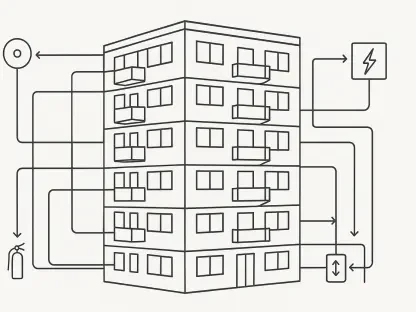
In a digital-first world, many startups often overlook the physical constraints that can eventually limit even the most sophisticated software solutions. The Smart Systems Stage addresses this gap by investigating the intersection of software and hardware, with a specific emphasis on the energy demands of modern data centers and the limitations of current power grids. As AI applications scale, the resulting pressure on infrastructure becomes a critical bottleneck that can stall growth if not managed correctly. This track explores how industrial automation, grid connectivity, and climate technology can be leveraged to turn these physical barriers into competitive advantages. For founders operating in robotics, logistics, or energy-intensive sectors, understanding these infrastructure realities is necessary for long-term viability. By addressing the hardware-software divide, the event prepares entrepreneurs to navigate a future where energy availability and hardware reliability are just as important as code quality.
Deploying Artificial Intelligence for Real World Application
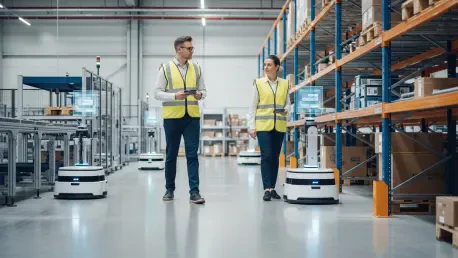
Transitioning from experimental demos to operational reliability is the primary challenge explored on the AI in the Real World Stage, where the stakes are significantly higher than in purely digital environments. When AI is deployed in sectors like manufacturing, defense, and heavy industry, any failure carries profound financial and safety implications that a startup may not survive. The programming focuses on the creation of trustworthy autonomous systems that remain functional even when access to the cloud is limited or compromised. This stage is particularly valuable for investors who must distinguish between a flashy prototype and a product capable of enduring the rigors of large-scale industrial production. By focusing on the nuances of edge computing and the necessity of verifiable security protocols, this track provides a realistic framework for deploying intelligent systems in the physical world. It emphasizes that the next phase of AI success depends on reliability, safety, and the ability to integrate with existing legacy systems.
The AI Stage, presented by Google Cloud, examines the profound shifts occurring within the software-as-a-service industry as generative AI and autonomous agents rewrite traditional business models. For many established software companies, the rise of AI agents represents an existential challenge to their existing pricing structures and workflows. This stage provides a deep dive into how enterprise AI adoption is forcing a complete overhaul of internal architectures, including the integration of DevSecOps and advanced AI security measures. Founders learn how to adapt their service models to an AI-first economy where the value proposition is increasingly focused on outcomes rather than just seat-based licensing. By exploring the practicalities of fine-tuning large language models and securing proprietary data, the sessions offer a technical and strategic guide for staying competitive. The focus is on moving beyond basic integration toward a fundamental reimagining of what a software company can achieve when AI is the core engine of the business.
Prioritizing Operational Excellence Over Market Speculation
Throughout the diverse discussions and stages, a clear consensus has emerged among industry leaders that tactical excellence and durable revenue models must now take precedence over speculative growth. AI is no longer treated as a standalone category but as a foundational force that is being integrated into every sector of the technology landscape, from financial services to industrial logistics. This shift signifies a maturing market where the margin for error has significantly thinned, requiring founders to be more disciplined in their approach to scaling. The emphasis on quality over hype encourages startups to align their business strategies with the physical realities of modern infrastructure, such as energy availability and hardware reliability. By focusing on these core strengths, companies are better positioned to navigate the complexities of a volatile economy. This pragmatic approach ensures that innovation is not just technically impressive but also commercially viable and capable of sustained growth.
The sessions at the event provided a comprehensive toolkit for founders who recognized that the era of unearned valuations had finally drawn to a close. Participants were urged to conduct rigorous audits of their energy dependencies and software architectures to ensure they could withstand upcoming infrastructure bottlenecks. Strategic focus shifted toward securing long-term partnerships with hardware providers and diversifying revenue streams to mitigate the risks associated with AI-driven market volatility. Investors identified a new class of resilient startups that prioritized operational reliability and measurable customer value over rapid, unsustainable expansion. By integrating the tactical advice offered across the six stages, entrepreneurs began to implement more robust DevSecOps practices and outcome-based pricing models. The transition toward a more disciplined startup ecosystem was solidified as the primary path to success. Ultimately, the insights gained necessitated a move toward strategic agility, ensuring leaders remained prepared for a more demanding market.