
The rapid evolution of generative artificial intelligence has fundamentally shifted from purely digital environments toward tangible, real-world applications that redefine how humans interact with their physical surroundings. As the boundaries between software and hardware continue to blur, the concept of Physical AI has emerged as the primary driver for the next wave of industrial and consumer innovation. Tuya Smart stands at the forefront of this movement, leveraging its expansive cloud platform and hardware-agnostic architecture to bring sophisticated machine learning models into everyday devices. By providing a bridge between complex neural networks and the practical constraints of consumer electronics, the company enables global manufacturers to deploy smarter, more responsive products at scale. This transition represents a departure from traditional automation, moving toward autonomous systems that can perceive and act within a dynamic environment to solve complex tasks.
Integration of Multimodal Intelligence and Edge Computing
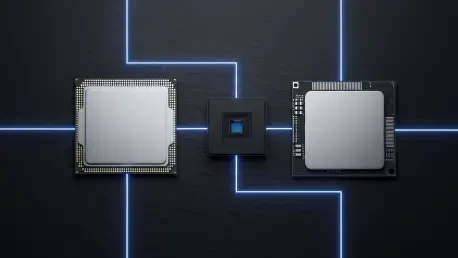
The core of modern Physical AI lies in the seamless integration of Large Language Models with localized hardware execution, allowing devices to understand natural language intent rather than just executing rigid commands. Tuya Smart has pioneered the implementation of multimodal capabilities within smart home hubs and industrial controllers, ensuring that data processing can occur where it is most efficient. This architectural strategy reduces latency by offloading specific reasoning tasks to the edge while maintaining a connection to robust cloud infrastructures for more intensive computations. Such a dual-layered approach is essential for applications like smart security systems or automated energy management, where split-second decision-making is a prerequisite for safety and efficiency. Consequently, manufacturers no longer face the daunting task of building proprietary AI stacks from scratch, as the platform offers standardized modules that handle model optimization.
Efficiency in the commercialization of Physical AI is further enhanced by the company’s ability to synchronize diverse hardware ecosystems through a unified developer environment. By offering a comprehensive suite of software development kits and low-code tools, the platform democratizes access to high-end AI capabilities for small and medium-sized enterprises. This ecosystem expansion ensures that specialized hardware, from robotic vacuum cleaners to sophisticated HVAC systems, can share intelligence and contextual data to create a more cohesive user experience. The emphasis remains on creating a feedback loop where physical interactions inform the refinement of the digital models, leading to iterative improvements in device performance. As these devices become more attuned to human behavior, the value proposition shifts from simple connectivity to proactive assistance, where the environment anticipates needs. This level of sophistication defines the current era.
The successful integration of Physical AI throughout global markets necessitated a strategic focus on cross-platform compatibility and decentralized processing capabilities. Organizations that embraced standardized protocols like Matter ensured that their hardware remained relevant within the increasingly complex smart ecosystem. It was observed that the most resilient business models prioritized the development of adaptive systems capable of learning from environmental stimuli rather than relying on static programming. Leaders in the field shifted their investments toward edge computing to enhance data privacy and reduce the operational costs associated with constant cloud reliance. This period of rapid commercialization demonstrated that long-term viability depended on the ability to provide seamless technology that supported human activity without oversight. Stakeholders moved to adopt modular AI architectures to mitigate risks associated with rapid technological changes and evolving consumer needs.