
Simon Glairy is a premier strategist in the global technology landscape, renowned for his deep expertise in risk management and the evolving intersection of insurance and artificial intelligence. As an expert in Insurtech, he has spent years analyzing how volatile shifts in technology infrastructure can ripple through markets, creating both catastrophic vulnerabilities and unprecedented opportunities. In this conversation, we explore the recent and jarring suspension of access to Anthropic’s frontier models in India—an event that has sent shockwaves through the second-largest market for frontier AI outside the United States. We delve into the concept of sovereign AI, the risks inherent in technological dependence on a single geopolitical power, and the aggressive financial strategies being proposed to ensure India’s strategic autonomy. From the “weaponization” of large language models to the shifting dynamics of global talent hubs, this interview provides a granular look at how a single U.S. government directive has forced a massive re-evaluation of the global AI race.
The sudden U.S. government directive requiring Anthropic to suspend access to its Fable 5 and Mythos 5 models for foreign nationals has created an immediate rift in the market. How does this restriction fundamentally alter the competitive landscape for companies that rely on high-level AI but operate with global, non-U.S. teams?
This decision is more than just a temporary technical glitch; it is a structural barrier that redefines who gets to lead in the next decade of innovation. When a company like Atomicwork, which maintains a lean but vital team of 25 employees in the U.S. while keeping its core engineering heartbeat in Bengaluru, suddenly finds its access severed, the playing field tilts instantly. It creates a reality where your competitive edge is no longer just about your code or your vision, but about the passports held by your engineering team. If your developers in India cannot access the same frontier models as a competitor based entirely in San Francisco, you are fighting a high-tech war with one hand tied behind your back. We are seeing a shift where the “location” of talent is becoming a liability rather than an asset, which is a massive reversal of the globalization trends we have seen over the last thirty years. This isn’t just about losing a tool; it’s about the erosion of trust in the global supply chain of intelligence.
Many Indian founders and investors are now calling for a radical shift toward “sovereign AI” following this incident. What does this moment reveal about the dangers of a nation’s digital future being tethered to technologies governed by foreign geopolitical interests?
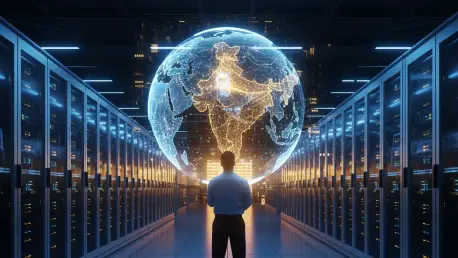
The shock and confusion felt by founders on that Saturday morning when the news broke wasn’t just about a service interruption; it was a realization of strategic vulnerability. For a long time, there was a comfortable assumption that these frontier models were neutral utilities, much like the internet itself, but we now see that American AI models are inextricably bound to American geopolitics. When access to the most advanced systems can be turned off like a faucet based on a directive from Washington, the concept of “strategic autonomy” ceases to be an academic theory and becomes a survival necessity. It draws a very uncomfortable parallel to the way Russia was cut off from the SWIFT financial system; it proves that in the modern era, technology is the ultimate weapon of influence. For a country like India, which has positioned itself as a global engineering hub, relying on a handful of foreign providers for the “brains” of their industry is now seen as a catastrophic risk that must be mitigated through domestic alternatives.
The debate over how to fund this autonomy is intense, with proposals for a ₹500 billion annual fund and a ₹2 trillion credit guarantee program. How do these massive figures compare to current initiatives, and is capital the primary hurdle to building competitive foundational models?
The current scale of investment is a drop in the bucket compared to what is actually required to sit at the top table of AI development. India’s existing IndiaAI Mission, with its outlay of ₹103.72 billion—roughly $1.2 billion—over five years, was a great starting point, but the Anthropic episode has shown it is nowhere near enough. When you look at the proposed ₹500 billion, or $5 billion, annual fund, you start to see the level of ambition needed to truly decouple from U.S. infrastructure. However, as some industry veterans have pointed out, throwing money at the problem is only one part of the equation; training a frontier model can cost anywhere from hundreds of millions to several billion dollars, but you also need the raw computing power and the specific execution talent that is currently concentrated in very few places. It is a race against time to build out cloud infrastructure and semiconductor capabilities that can support these massive capital injections. The proposal for a ₹2 trillion credit guarantee is perhaps the most significant part of the conversation, as it recognizes that hardware and hardware-access are the true gatekeepers of AI sovereignty.
We’ve seen companies like Opendoor shuttering Indian offices to bring work closer to the U.S., citing AI-driven efficiencies. Do you believe we are entering an era where AI will diminish India’s role as a global talent hub, or will it simply force a pivot toward a different kind of engineering?
The move by Opendoor to bring operational work back to the U.S. is a canary in the coal mine for the global labor market. It highlights a growing trend where smaller, AI-native teams can replace large, distributed workforces, potentially undermining the traditional “outsourcing” model that built much of India’s tech economy. This shift is creating an environment where the efficiency gained from AI allows companies to prioritize proximity to their customer base over the cost-savings of offshore talent. If access to frontier AI remains restricted or imbalanced, the pressure to “re-shore” operations to the U.S. will only intensify, as that is where the most advanced tools are legally and physically situated. However, this also presents a massive opportunity for India to pivot away from being a service provider for foreign firms and instead focus on building specialized, lower-cost models like the ones we’ve seen from Avataar AI. The future isn’t necessarily a decline in talent, but a forced evolution where Indian engineers must become the architects of their own foundational technologies rather than just the implementers of someone else’s.
With the realization that there is no such thing as a “geopolitically neutral” LLM, how viable is the push for open-source and smaller models as a long-term solution for enterprise and government sectors?
The push for open-source is no longer just a preference for the developer community; it has become a core pillar of national security and business continuity. When you look at the advice from leaders at companies like Zoho, the message is clear: embrace smaller, manageable models that you can actually control and host locally. By moving away from the “frontier” giants and focusing on Indian or even Chinese open-source alternatives, organizations can shield themselves from the volatility of U.S. export controls and sudden policy shifts. This strategy is about building resilience into the system, ensuring that even if a major provider like Anthropic or OpenAI is forced to pull the plug, the business logic and data remain operational on independent infrastructure. It is a more sustainable, if technically more challenging, path that prioritizes long-term stability over the immediate “wow factor” of the newest U.S. models. We are going to see a much more fragmented AI landscape where “good enough” local models become the standard for 90% of enterprise tasks, leaving the frontier models for only the most complex, non-sensitive research.
What is your forecast for the future of global AI cooperation in light of these increasing nationalistic barriers?
I believe we are entering an era of “Technological Non-Alignment,” where countries like India will refuse to be tied to a single tech superpower’s orbit. The Anthropic incident was a catalyst that will accelerate the creation of regional AI blocs and a surge in domestic foundational model development that we haven’t seen before. Within the next three to five years, I expect to see India significantly surpass its current ₹103.72 billion investment, likely moving closer to the ambitious ₹500 billion annual targets discussed by industry leaders to build a truly independent stack. While the U.S. may maintain its lead in the sheer raw power of models like Fable 5 or Mythos 5, the rest of the world will become much more adept at using open-source frameworks and specialized hardware to close the gap. The global AI race is transitioning from a sprint for the “best” model to a marathon for the most “reliable” and “sovereign” ecosystem, and any company or country that fails to secure its own digital borders will find itself at the mercy of foreign policy decisions they cannot influence.