
Simon Glairy is a distinguished authority in the world of high-end consumer electronics, particularly known for his rigorous, data-driven analysis of wearable technology. With a career spent scrutinizing the transition from basic fitness trackers to the sophisticated “Ultra” wearables of today, he possesses a unique vantage point on how hardware and software must harmonize to survive the most demanding environments. Simon has become the go-to expert for understanding the nuances of sensor accuracy and the underlying silicon that powers our daily lives, often bridging the gap between raw engineering specs and the tangible user experience. In this discussion, we take a deep dive into the engineering marvels and the real-world performance of the latest rugged flagship in the Android ecosystem, exploring why these incremental changes represent a much larger shift for the industry.
Our conversation explores the revolutionary shift in battery life brought about by the Snapdragon Wear Elite platform and the physical refinements that have successfully slimmed down the titanium chassis while increasing internal capacity. We explore the cutting-edge 5,000-nit display technology and its impact on outdoor legibility, while also breaking down the accuracy of the new health intelligence tools like Vitals and the Heart Health Score. Furthermore, we examine the watch’s performance during intensive athletic testing, from indoor cycling to resistance training, and discuss where the platform still has room for growth in terms of physical navigation and ecosystem inclusivity for non-Samsung users.
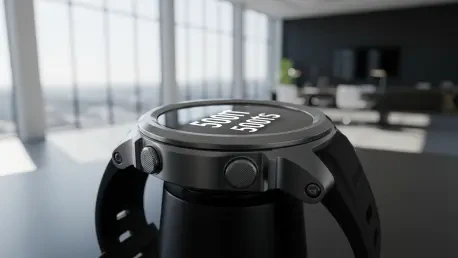
The current generation of premium rugged smartwatches has reached a peak brightness of 5,000 nits with this latest release, but how does that staggering number actually translate to the visual experience when you are out in the middle of a glare-heavy summer afternoon?
The jump from the previous generation’s 3,000 nits to a staggering 5,000 nits on the 1.5-inch Super AMOLED panel is one of those technical milestones that sounds impressive on a spec sheet but proves its worth the moment you step into harsh, direct sunlight. During my testing over the last week, which included several high-glare summer days, the display remained remarkably legible, delivering a punchy, high-contrast image that never looked washed out or difficult to parse. On the original model, I often noticed that smudge reflections across the flat sapphire crystal could obscure data fields, but the sheer raw backlight output of the new model effectively neutralizes that issue by punching straight through the surface grime. While you might not want a watch that takes people’s eyeballs out in a dark room, having that headroom for outdoor environments means you are never squinting at your split times or navigation cues. It is a triumph of display engineering that ensures the “Ultra” moniker isn’t just about durability, but about absolute visibility regardless of the environmental conditions you find yourself in.
Samsung has managed to fit a significantly larger 800mAh battery into a frame that is actually thinner than its predecessor; can you explain the engineering magic behind the Snapdragon Wear Elite platform that allows for such a transformation?
The transition to the Snapdragon Wear Elite platform is the cornerstone of this device’s success, as the move to a 3nm architecture provides the power efficiency required to make a massive battery cell viable in a wearable form factor. We are looking at a 35% increase in battery capacity, moving up to an 800mAh cell, while the engineering team simultaneously shaved the case thickness down from 12.1mm to just 10.7mm. This 1.3mm reduction is immediately noticeable on the wrist, as the watch sits lower against the arm and slips more easily under jacket cuffs, which was a major friction point with the bulkier first-generation design. This combination of a more efficient chipset and a larger physical reservoir has turned this into a genuine four-day smartwatch even under intensive use, which fundamentally changes the way you interact with the device. You no longer have to strategically plan your charging around your sleep or your workouts; you can simply wear it for half a week at a time without a second thought, which is a massive milestone for the Wear OS ecosystem.
When we look at the new health intelligence tools like the “Vitals” feature, how does the watch handle the complexity of monitoring five key bio-signals to establish a personal recovery baseline?
The Vitals feature is a sophisticated addition that brings Samsung’s recovery tracking in line with top-tier competitors by monitoring resting heart rate, heart rate variability, respiratory rate, skin temperature, and blood oxygen saturation over a rolling seven-night period. Instead of bombarding the user with raw data points that can be difficult to interpret, the software establishes a personal baseline and only issues alerts when there are meaningful deviations from your normal physiological state. In my testing alongside reference devices like the Whoop MG and the Garmin Fenix 8 Pro, the readings were remarkably consistent, though it does require a full week of calibration before it starts providing those actionable insights. It serves as an early-warning system that can help you understand when your body is under stress or potentially fighting off an illness before you even feel the physical symptoms. This level of nuanced analysis moves the watch away from being a passive data logger and toward being a proactive health companion that provides genuine context to your daily numbers.
Accuracy is the ultimate proving ground for any rugged sports watch, so how did the optical heart rate sensor perform when pitted against a gold-standard chest strap during high-intensity intervals?
During a series of grueling tests, including a 25-minute steady-state run followed by four 400-meter threshold intervals, the heart rate accuracy was nothing short of exceptional, often tracking beat-for-beat with a Garmin HRM-600 chest strap. For instance, in an indoor cycling session, the Galaxy Watch Ultra 2 recorded an average of 134.36 bpm compared to the chest strap’s 134.00 bpm, which is a negligible variance for a wrist-based sensor. While there is a brief 30-second settling period at the start of high-intensity efforts—a common trait for optical sensors—it mirrored the chest strap’s immediate response curve with remarkable precision during recovery drops and interval surges. It even outperformed other dedicated fitness trackers on my opposing wrist, proving that Samsung has significantly refined its algorithmic approach to heart rate monitoring. This level of reliability is crucial for athletes who rely on zone training to optimize their performance and prevent overtraining during long-term preparation cycles.
The “Fitness Index” and “Heart Health Score” introduce new ways to visualize biometric data; what value does including Bioelectrical Impedance Analysis (BIA) add to these holistic snapshots of a user’s health?
By integrating BIA directly into the watch, Samsung allows users to estimate body fat percentage, skeletal muscle mass, and body water volume simply by placing their fingers against the side buttons to send a microcurrent through the upper body. While my testing showed that the watch consistently reported body fat percentages about 2-3% higher than a Withings smart scale, the fact that it was consistently over-reporting makes the data much more useful for tracking long-term trends rather than just absolute snapshots. This data now feeds into the Heart Health Score, providing a more comprehensive look at how lifestyle habits and body composition affect cardiovascular strain over time. The Fitness Index then takes this further by visualizing five pillars—Cardio, Endurance, Strength Capacity, Flexibility, and Body Composition—on a pentagon radar graph. This benchmarks your performance against age- and gender-matched peer groups, turning abstract numbers into a clear, competitive, and highly visual representation of where you stand in your fitness journey.
Navigation is a key part of the user experience, especially during a workout, so how do you feel about the decision to omit a physical rotating bezel or a digital crown in this “Ultra” iteration?
The omission of a physical rotating bezel or a functional digital crown remains one of the few significant ergonomic hurdles, as relying entirely on a touchscreen during a high-paced run or a sweaty gym session can feel clunky. While the customizable orange “Quick Button” is a welcome addition for starting workouts or dropping lap markers, swiping through dozens of horizontal Tiles on a 1.5-inch screen is simply less efficient than a tactile, physical input. Samsung has a rich history with the rotating bezel, and its absence here feels like a missed opportunity to elevate the cushion-cased chassis to absolute perfection. When you are moving at speed and your fingers are damp, the precision of a physical dial is unmatched, and I hope we see a return to this hallmark design in future iterations of the Ultra line. That said, the software is responsive enough that it isn’t a dealbreaker, but it certainly keeps the device from feeling like a truly specialized tool for the most extreme athletic conditions.
With a price tag of $699.99, which is a modest $50 increase over the previous model, how does this device position itself against the heavy hitters from Apple and Garmin in the premium market?
Even with the slight price uptick, this watch remains strategically positioned to undercut its most direct competitors, sitting comfortably below the $799 entry point of the Apple Watch Ultra series and well below the $1,000+ price tags of high-end Garmin flagships. For $699, you are getting a titanium build, a industry-leading 5,000-nit display, and the latest 3nm silicon architecture, which represents substantial value for the Android user base. It occupies a unique sweet spot in the market, bridging the gap between a standard daily smartwatch and a hardcore, multi-sport endurance tool without the prohibitive cost of some specialized rivals. While some health features remain locked to those within the Samsung phone ecosystem—which is a frustration for general Android users—the raw hardware package and the depth of the Samsung Health suite make it the definitive Wear OS watch to beat. It offers a premium, rugged experience that feels justified by its durability and the significant leap in battery longevity we’ve seen this year.
Sleep tracking and stress monitoring are becoming core pillars of the wearable experience; how has Samsung refined these tools to provide more than just a morning data dump?
Sleep detection on this device is incredibly reliable, often picking up the exact moment of drift-off or awakening within a five-to-ten minute window when compared to a high-end sleep tracker like the Eight Sleep Pod 5. Beyond just tracking REM, Deep, and Light stages, the watch offers a structured Sleep Coaching program that assigns you an animal persona and sets multi-week behavioral targets to improve your consistency. It also captures night-time skin temperature and blood oxygen levels, with a 5% battery drain over a full night of monitoring being an impressively low cost for such a rich data set. However, while the all-day stress tracking provides a useful color-coded timeline based on HRV, I still find it a bit passive compared to some other platforms that offer proactive prompts for breathing exercises when they detect elevated strain. There is still room for Galaxy AI to step in here and offer more contextual insights, perhaps suggesting a rest day when sleep scores and stress levels indicate a lack of recovery, which would make the platform feel truly intelligent.
The watch now includes specialized profiles for diving and trail running; how do these new additions leverage the hardware’s rugged certifications like IP69K and 10 ATM?
The new diving profile, developed in partnership with the specialists at Mares, is a perfect example of how Samsung is pushing the hardware into more extreme territory by tracking real-time depth, water temperature, and ascent rates. With its 10 ATM and IP69K ratings, the watch is built to handle the pressures and environmental stresses of underwater exploration, providing a level of utility that was previously reserved for dedicated dive computers. Similarly, the Trail Running profile adds much-needed tools for outdoor enthusiasts, such as turn-by-turn route navigation, elevation mapping, and automated hydration loss estimations based on your effort and the environment. These features aren’t just software skins; they are deeply integrated tools that make use of the dual-frequency GPS and the improved sensor array to provide accurate data in challenging terrains. It signals a shift in Samsung’s strategy, where they are no longer just making a “smart” watch that can go outside, but a “sports” watch that can hold its own in the wilderness.
What is your forecast for the rugged smartwatch category?
I believe we are entering an era where the “Ultra” category will move beyond just being a larger version of a standard watch and start becoming a testbed for extreme sensor innovation and battery breakthroughs. We are going to see a much heavier integration of contextual AI that doesn’t just show you a graph of your heart rate, but tells you exactly how a poor night’s sleep in a high-altitude environment is going to affect your performance for the next 48 hours. I also expect the gap between dedicated sports watches and smartwatches to continue shrinking as the silicon becomes more efficient, allowing for the week-long battery life that was once the exclusive domain of brands like Garmin. The next big frontier will likely be non-invasive glucose monitoring or more advanced hydration tracking, and with the engineering foundation Samsung has laid with this 3nm architecture and 800mAh battery, they are perfectly positioned to lead that charge. The consumer expectation is shifting from wanting a “notification center on the wrist” to wanting a “performance lab on the wrist,” and the competition to fulfill that role is going to drive some incredible hardware leaps in the next 24 to 36 months.