
The traditional concept of a cybercriminal carefully selecting a corporate target based on its industry or annual revenue has officially become a relic of the past. Today, the digital underworld operates on a far more efficient and cold-blooded principle: they are no longer hunting for specific companies, but rather for specific vulnerabilities within the hardware that powers the modern internet. This transition marks the birth of infrastructure-driven cybercrime, a paradigm where the exploitability of a network appliance is the only metric that matters to an intruder. This evolution fundamentally shifts the burden of defense from broad policy-making to rigorous, hardware-centric hygiene.
By moving away from industry-specific targeting, attackers have effectively democratized digital risk. Whether a business operates in healthcare, retail, or manufacturing, the common denominator is the hardware sitting at the edge of the network. This shift toward hardware-centric vulnerability hunting allows malicious actors to cast a much wider net, automating the process of identifying victims through mass scanning for unpatched gateways. Consequently, the era of “security through obscurity” has ended, replaced by an environment where any visible device is a potential entry point for a global threat actor.
The Paradigm Shift Toward Infrastructure-Driven Cybercrime
The core principles of this new era are rooted in the automation of the reconnaissance phase of an attack. Rather than researching a company’s financial status, modern hackers deploy automated scripts to scan the global IP space for known flaws in firmware and network operating systems. This methodology has emerged because it scales infinitely better than manual victim selection, allowing a single group to compromise hundreds of organizations simultaneously regardless of their geographic location or economic sector.
This transition is particularly significant within the current technological landscape because it exposes the fragility of the “perimeter” model. As more businesses rely on remote access and cloud-integrated hardware, the surface area for these infrastructure-driven attacks has expanded. The shift suggests that the primary vulnerability is no longer the human element or a specific software application, but the very machines that route and manage data traffic across the enterprise.
Core Mechanisms of Modern Infrastructure Exploitation
VPN Gateways and Network Appliance Vulnerabilities
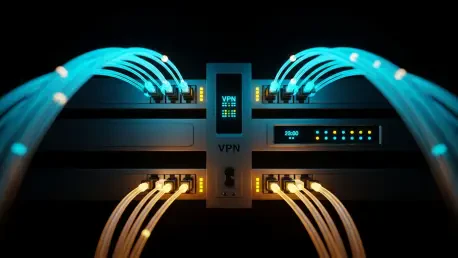
Virtual Private Networks (VPNs) have transitioned from being a security solution to becoming the primary liability for many organizations. As the dominant entry point for intruders, VPN gateways are now involved in nearly three-quarters of all ransomware incidents. These appliances are high-value targets because they sit outside the traditional firewall, often with direct access to the internal network. Once a gateway is compromised, the attacker bypasses almost all external defenses, gaining a level of access that previously required weeks of phishing and lateral movement.
The performance of these attacks is increasingly sophisticated, often leveraging “zero-day” or “n-day” vulnerabilities that remain unpatched for far too long. Because these devices handle encrypted traffic, many standard monitoring tools fail to inspect the malicious commands being sent to the appliance itself. This blind spot makes VPNs an ideal staging ground, providing attackers with a persistent and often invisible foothold that is incredibly difficult to dislodge without a complete hardware reset.
The Specialization of Ransomware Ecosystems
The rise of highly specialized groups like Akira illustrates the efficiency of a focused hardware-attack strategy. By dedicating their resources almost exclusively to exploiting flaws in specific brands of hardware, such as SonicWall VPN appliances, these groups have optimized their “time-to-encryption” metrics. This specialization allows them to develop highly refined playbooks that are tailored to the specific quirks of a manufacturer’s operating system, ensuring a higher success rate than groups that attempt to exploit a broad range of technologies.
This technical focus has real-world consequences for the insurance and recovery landscape. When an ecosystem becomes this specialized, the attackers know exactly how to bypass the built-in defenses of the target hardware. They aren’t just looking for any way in; they are looking for the most efficient way to disable the target’s ability to respond. This move toward specialized, hardware-focused ransomware campaigns represents a maturation of the cybercrime market, where efficiency and volume are prioritized over the potential “big score” of a single high-profile target.
Current Trends in the Threat Landscape
The most alarming recent development is the surge in attack frequency targeting small-to-mid-sized enterprises. Because these firms often lack the dedicated security personnel to manage complex patching cycles for their network hardware, they have become the path of least resistance. Automated vulnerability scanning does not distinguish between a multinational corporation and a local family business; it only identifies a vulnerable IP address. This has led to a dramatic increase in the financial severity of claims for smaller firms, who now face costs that can easily threaten their operational survival.
Furthermore, the tactics of ransomware operators are shifting from manual negotiation toward high-velocity automation. The goal is no longer to secure a multi-million dollar payout from a single source, but to extract hundreds of smaller payments with minimal human intervention. This volume-based approach is made possible by the reliability of infrastructure exploits. By focusing on the hardware, attackers can ensure a consistent stream of victims, creating a predictable and scalable revenue model that mirrors the “Software as a Service” business world.
Real-World Applications and Defense Performance
The practical application of these infrastructure threats is most visible in how they interact with modern security stacks. A critical revelation is the failure of standalone Endpoint Detection and Response (EDR) tools in the face of an infrastructure breach. Because many ransomware groups have become adept at disabling security agents once they gain administrative access via a VPN, the presence of top-tier software is no longer a guarantee of protection. This has forced a shift toward Managed Detection and Response (MDR), where human analysts monitor network behavior 24/7 to catch the subtle signs of an intruder before they can kill the defensive software.
In the insurance sector, this has led to a radical change in how digital risk is underwritten. Insurers are increasingly looking at the specific make and model of a company’s network hardware rather than just its industry classification. Implementing 24/7 monitoring is becoming a prerequisite for coverage, as the data shows that human intervention is often the only thing that can stop an automated infrastructure attack. Those who rely solely on passive software solutions are finding themselves increasingly uninsurable as the “protection gap” between software capabilities and attacker ingenuity continues to widen.
Technical and Operational Challenges
One of the most significant challenges facing the industry is the increasing ability of attackers to render standard security agents useless. Once an attacker controls the infrastructure, they effectively control the environment in which security software operates. This “living off the land” technique, combined with the ability to disable defensive tools, means that the window for response is shrinking. For small firms, this operational reality is compounded by the rising financial severity of claims, as the cost of forensics and system restoration often exceeds the initial ransom demand.
Ongoing development efforts to mitigate these risks are currently focused on the speed of reporting and the integration of financial recovery mechanisms. In cases of financial fraud—which still accounts for a significant portion of claims—the data suggests that reporting the incident within a tight 72-hour window is the single most important factor in recovering stolen assets. This emphasizes the need for a collaborative approach between cybersecurity providers, financial institutions, and insurance carriers to create a more resilient recovery ecosystem.
Future Outlook on Digital Risk and Underwriting
The trajectory of the cybersecurity landscape points toward a deeper integration of 24/7 monitoring and more stringent hardware standards. We are moving toward a future where “continuous underwriting” becomes the norm, with insurers monitoring a policyholder’s network hygiene in real-time. This will likely lead to a marketplace where businesses with outdated or unpatched hardware are charged significantly higher premiums or denied coverage altogether, effectively forcing a global upgrade of internet infrastructure.
Potential breakthroughs in threat detection will likely focus on behavioral analysis at the hardware level, rather than just the software level. As hardware-centric security becomes more sophisticated, we can expect to see devices that are “secure by design,” with immutable kernels that prevent the kind of administrative takeover that currently plagues VPN gateways. This long-term shift will be essential for global business resilience, as it addresses the root cause of the current crisis rather than just treating the symptoms of individual ransomware infections.
Comprehensive Summary of the Infrastructure-Driven Era
The shift toward infrastructure-driven cybercrime has fundamentally rewritten the rules of digital risk, moving the focus away from industry-specific threats and toward the universal vulnerabilities inherent in our shared hardware. This era is defined by the dominance of VPN exploits and the rise of specialized ransomware groups that prioritize technical efficiency over selective targeting. The review demonstrated that traditional, passive security measures are no longer sufficient to protect against attackers who can disable software agents once they have compromised the underlying infrastructure.
The industry responded by prioritizing managed services and rapid incident reporting, which proved far more effective than relying on software alone. Organizations that adopted a hardware-centric view of their security posture and integrated 24/7 monitoring were significantly better positioned to withstand the surge in automated attacks. Ultimately, the transition to this new threat landscape necessitated a more proactive and technically rigorous approach to defense, where the management of network appliances became as critical as the protection of the data itself.