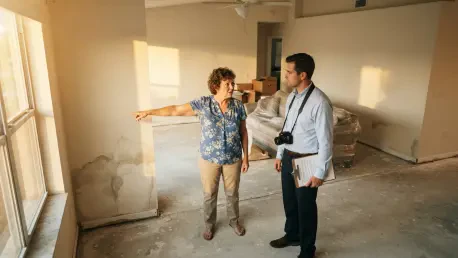

Florida homeowners are finding that the cost of proactive policy premiums is often much lower than the price of repairing uninsured structural damage. Recent weather events have left communities across Broward County and the surrounding South Florida region struggling to reconcile the physical reality of water-damaged interiors with the financial reality of their insurance portfolios. For residents who watched floodwaters seep into their living rooms, reaching heights that compromised drywall and flooring, the recovery process has transitioned from manual labor to complex administrative battles. Despite the increasing frequency of extreme weather, a staggering number of residents continue to operate under the assumption that their primary residence is secure without supplemental protection. This regional crisis has revealed a significant disparity between the perceived safety of a neighborhood and the actual environmental threats posed by rising water levels, forcing many to fund massive restoration efforts entirely out of pocket while facing long-term structural instability and the loss of personal heirlooms.
The Intersection of Risk and Misunderstanding
Misconceptions: The Gap in Standard Coverage
Standard insurance policies often lead property owners into a false sense of security regarding water-related catastrophes. Many residents remain unaware that traditional homeowners’ insurance explicitly excludes damage caused by rising external water, a distinction that only becomes clear during the claims process. Mark Friedlander of the Insurance Information Institute has noted that approximately 80% of Florida homeowners currently lack dedicated flood insurance, creating a dangerous coverage gap. While some rely on the National Flood Insurance Program (NFIP), the current 2026 caps of $250,000 for structural damage and $100,000 for personal belongings frequently fall short of actual replacement costs in today’s real estate market. Without supplementary private coverage, a total loss can result in a devastating financial shortfall. Homeowners must realize that the technical definitions used by insurers regarding rising water can be the difference between a fully funded renovation and complete financial ruin.
Hazard Zones: Evaluating the Myth of Zero Risk
The traditional reliance on flood maps to dictate insurance necessity has created a culture of complacency among those living outside designated high-risk zones. However, experts continuously emphasize that there is no such thing as zero risk in the current climate landscape, as modern drainage systems often struggle to keep pace with record-breaking rainfall. The financial stakes of this gamble are exceptionally high; industry data suggests that even a single inch of water inside a home can result in upwards of $25,000 in repair costs. When homeowners opt out of flood coverage because they are not mandated by a lender to carry it, they effectively accept the entire burden of that risk. The shift in weather patterns has shown that inland neighborhoods, once considered safe, are now just as vulnerable to localized flash flooding as coastal properties. This evolving reality necessitates a broader adoption of coverage that transcends the binary classification of government hazard maps, prioritizing ground-level vulnerability.
Strategic Planning: Navigating the Waiting Period
Successful homeowners in the region have identified that the most critical hurdle in securing property protection is the time requirement associated with new policies. Because flood insurance typically involves a 30-day waiting period before coverage becomes effective, proactive residents secured their policies well before weather patterns shifted. This mandatory buffer is intended to prevent the purchase of coverage during active threats, a strategy that left late-movers vulnerable during recent storm cycles. Those who analyzed their risks early adopted flood premiums as a fixed cost of living, effectively shielding their assets from the inevitable volatility of the regional environment. These individuals recognized that waiting for a named storm to act was a fundamental error in risk management. Consequently, the transition toward universal coverage became a priority for those who valued long-term residential stability. They moved quickly to consult with adjusters to bridge the gap between perceived safety and actual risk.