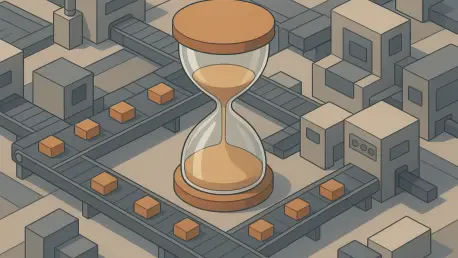

The silence echoing through a modern manufacturing plant following a localized disaster is often far more expensive than the physical wreckage left behind by fire or flood. For decades, the standard math of industrial insurance was simple: the bricks, mortar, and machinery were the most expensive things to lose. Today, that equation has been flipped on its head. Recent data reveals a startling shift where the secondary shockwaves of a disaster—the weeks and months of forced idleness—now carry a price tag significantly higher than the physical destruction that caused them. In the modern global economy, a company’s inability to operate has become a far more potent financial threat than the fire or flood that initially silenced the assembly line.
This inversion of risk is not a speculative theory but a documented reality. A comprehensive analysis of nearly 8,000 insurance claims spanning the last five years shows a fundamental shift in the landscape of corporate liability. The primary finding is a stark divergence between the cost of physical property damage and the resulting business interruption losses. Traditionally, the cost to repair a building was the primary driver of an insurance claim. However, modern industrial complexities have inverted this relationship, making the “multiplier effect” of a disruption far more damaging than the initial physical trigger.
The Inversion of Corporate Risk: When Doing Nothing Costs More Than Rebuilding
The financial burden of an idle facility has grown exponentially as organizations have transitioned toward high-value, tech-dependent production. When a factory floor goes quiet, the loss is no longer measured merely in lost hours but in the erosion of market share, the breach of customer contracts, and the ongoing drain of fixed costs that do not vanish just because the machines have stopped. The cost of “doing nothing” while waiting for repairs now routinely exceeds the capital required to replace the damaged assets themselves.
This trend is particularly evident in high-tech sectors where specialized equipment is not off-the-shelf. The financial fallout of a disruption radiates far beyond the site of the physical damage, affecting global distribution networks that expect a constant flow of product. As businesses have become more specialized and lean, their margin for error has evaporated, turning minor localized incidents into catastrophic balance-sheet events. The resilience of a company is no longer tied to the strength of its walls, but to the continuity of its processes.
Furthermore, the concentration of value into fewer, larger production hubs has created a “bottleneck effect” in corporate risk management. A single fire in a critical clean room can halt the revenue stream of a multibillion-dollar enterprise for months. This concentrated vulnerability means that a loss of a relatively small physical footprint can trigger a nine-figure insurance claim. The math of 2026 dictates that time is now the most expensive commodity a business can lose.
Mapping the Shift from Tangible Assets to Operational Continuity
The landscape of corporate risk is undergoing a fundamental transformation driven by the extreme interconnectedness of global trade. According to recent insurance data, the average business interruption claim has surged to approximately $920,000, dwarfing the average property damage claim of roughly $540,000. This 70% premium on interruption costs highlights a shift in focus from the tangible to the operational. The sheer scale of these losses is reflected in total claim values reaching into the billions over recent assessment periods.
Perhaps most concerning for risk managers is the pace of this escalation; claim severity has been rising significantly even as the frequency of events remains relatively stable. This suggests that when things go wrong in the modern economy, they go wrong on a much larger and more expensive scale than they did in previous decades. The focus has moved from “What did we lose?” to “How long are we down?” This question determines the survival of the enterprise in a competitive market.
The complexity of modern machinery also plays a vital role in this shift. In the past, a general contractor could source parts locally to fix a standard assembly line. Today, a single component might be proprietary and manufactured by only one supplier in another part of the world. The time required to navigate these specialized supply chains contributes directly to the ballooning costs of business interruption, making the recovery phase the most expensive part of any disaster.
Analyzing the Primary Catalysts of Escalating Financial Loss
The surge in business interruption costs is not merely a product of bad luck; it is the result of specific industrial trends and persistent hazards that have grown more expensive to manage. Fire remains the dominant driver of high-value interruptions, accounting for over 40% of total claim values. Fires and explosions were responsible for the vast majority of the most expensive man-made losses recorded in the five-year window leading up to 2026. In sectors like semiconductor manufacturing and energy production, a fire at a single specialized facility can halt operations across an entire corporate group.
The pursuit of capital efficiency through lean and just-in-time supply chains has inadvertently stripped away the buffers that once protected companies from volatility. By adopting these models, many enterprises have traded resilience for short-term savings. When a critical node in the supply chain fails—particularly in high-demand sectors like metal processing or chemicals—there is no safety stock to lean on. This lack of inventory causes an immediate and total cessation of revenue, turning a manageable delay into a complete operational shutdown.
Climate-related events continue to place unprecedented stress on global industries, with insured catastrophe losses exceeding $100 billion annually for several consecutive years. While hurricanes and earthquakes dominate headlines, “silent” perils like localized water damage and machinery breakdowns actually account for the majority of claim volume. This proves that everyday operational failures are just as likely to trigger a massive business interruption event as a major storm. The sustained pressure from these natural and man-made catastrophes creates a volatile environment for coverage.
Expert Perspectives on Recovery Timelines and Economic Headwinds
Industry analysts point to a lengthening “recovery window” as a primary reason for the ballooning costs of claims. It is no longer a matter of simply hiring a contractor to rebuild; the modern recovery process is bogged down by complex variables that extend far beyond the initial disaster. Persistent inflation has driven up the cost of specialized replacement parts and expert labor, meaning every day of downtime is more expensive to mitigate than in previous years.
Replacing highly technical machinery often involves wait times of 18 to 24 months, especially when geopolitical tensions or tariffs impact the import of essential components. These extended lead times mean that even if the physical structure is repaired quickly, the business cannot resume operations until the specific technology is back in place. This gap between physical repair and operational readiness is where the majority of financial loss now occurs.
In regulated industries like defense or pharmaceuticals, resuming operations involves a high hurdle of re-certification. Facilities must undergo rigorous testing and product validation before they can return to market. This process can add months to a recovery timeline, during which the business remains unable to generate revenue. Analysts suggest that from 2026 to 2028, these regulatory and logistical delays will continue to be the primary drivers of claim severity, forcing a rethink of traditional indemnity periods.
Strategies for Mitigating Interruption Exposure and Underinsurance
As the gap between property damage and interruption costs widens, businesses must evolve their risk management strategies to ensure they are not left with a shortfall when disaster strikes. Many companies rely on legacy insurance policies that utilize outdated valuations and insufficient maximum indemnity periods. To avoid the trap of underinsurance, risk managers must review their policies annually, ensuring that the window of coverage—often set at 12 or 18 months—is extended to match the realistic 24-month recovery timelines seen in today’s market.
Investing in node-specific resilience is another critical strategy. Rather than spreading resilience efforts thin, organizations should identify single-point-of-failure sites within their network. Enhancing fire suppression systems, diversifying suppliers for critical components, and maintaining strategic safety stock at these high-value nodes can significantly dampen the financial impact of a disruption. These targeted investments often yield a much higher return than broad, non-specific insurance premiums.
Developing dynamic business continuity plans is no longer an optional exercise for large enterprises. Companies must develop robust strategies that account for multi-year recovery scenarios. This includes pre-vetted contracts with alternative manufacturers and clear protocols for shifting production across different geographic regions. By maintaining the ability to redirect revenue streams while a primary site is offline, a company can survive a major interruption that might otherwise lead to total insolvency.
The data gathered during the first half of this decade demonstrated that the traditional focus on physical assets was insufficient for the complexities of a globalized economy. Business leaders realized that the protection of time and operational flow was just as vital as the protection of physical property. Organizations that successfully navigated these challenges did so by expanding their indemnity periods and diversifying their supplier bases before a crisis occurred. These proactive measures transformed risk management from a simple insurance purchase into a strategic pillar of corporate longevity. By prioritizing resilience at critical production nodes, companies ensured that they could withstand localized disasters without suffering catastrophic financial ruin. This period proved that even modest investments in preparedness could significantly dampen the financial impact of a disruption, helping enterprises survive an era where the cost of standing still was higher than ever before. Moving forward, the industry adopted a more holistic view of risk, where continuity and agility were valued just as highly as the physical assets themselves.