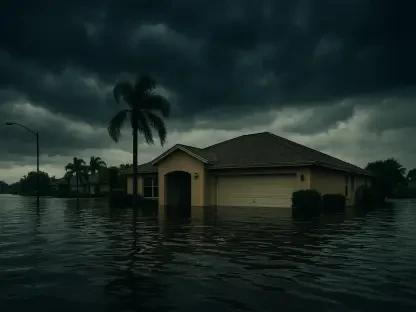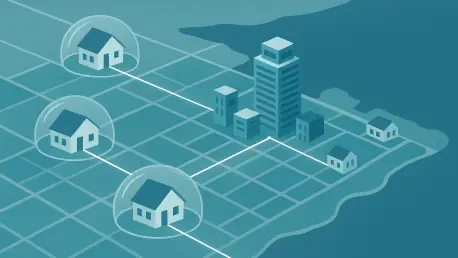

Local insurance professionals describe the current trajectory as a ticking time bomb because the premium revenue from safe homes is no longer available to offset high-risk claims. This warning comes as Florida’s state-backed Citizens Property Insurance Corporation maneuvers through a radical structural overhaul designed to offload hundreds of thousands of policyholders onto private carriers. The strategy, known as depopulation, represents a fundamental shift in how catastrophe risk is distributed across the peninsula. By reducing the size of the public book of business, officials hope to shield taxpayers from the threat of massive assessments following a major storm. However, the mechanism of this transfer relies on a sophisticated and unprecedented level of data sharing. Private insurance firms are now granted access to granular property details that were once proprietary to the state. This transition has ignited a complex debate regarding the future of coastal living and individual security.
Strategic Mechanisms: The Process of Risk Transfer
Leveraging Information Asymmetry: The Data Blueprint
The transfer process is powered by a massive data exchange involving over 300 specific data points for every policy in the Citizens portfolio. These detailed spreadsheets provide private insurers with an exhaustive blueprint of a property’s structural integrity, historical claim frequency, and specific risk factors that often bypass the visibility of local agents. This exclusivity allows large carriers to utilize advanced predictive modeling to identify and select the most desirable, low-risk properties—a practice frequently described as cherry-picking. By arming the private industry with such precise information, the state has created a powerful incentive for capital to return to a market that many companies previously viewed as too volatile. This high-level data access creates a significant competitive advantage for corporations, enabling them to vet potential assets with extreme precision while the state facilitates the migration of the most profitable accounts.
Legislative Efforts: Correcting Historical Imbalances
Current legislative maneuvers are increasingly framed as a necessary righting of the ship to resolve deep-seated issues stemming from prior policy decisions. For years, artificial caps on premium increases kept Citizens’ rates significantly lower than those offered by private competitors, causing the state-backed insurer to balloon in size. This cost inversion effectively undercut the private market, forcing the state to carry a disproportionate share of the risk. Today, lawmakers are focused on reversing this trend to restore the health of the private industry and protect the state from the necessity of a taxpayer-funded bailout. By encouraging aggressive depopulation, the government seeks to return Citizens to its original mission as a true insurer of last resort. This shift aims to re-establish a balanced ecosystem where private companies can compete fairly without being crowded out by subsidized public rates that ignore the true cost of coastal exposure and hurricane risk.
Societal Impact: Consequences of Massive Depopulation
Paradoxical Trends: Policyholder Retention Issues
Despite the statistical success in offloading policies, many residents find themselves caught in a cycle of instability. Data reveals a perplexing trend where private companies are purging their existing portfolios of perceived risks while simultaneously acquiring thousands of new, data-vetted policies from the state. This leads to frustrating scenarios where homeowners who have invested heavily in impact-resistant windows and reinforced roofing systems are still dropped by their providers under the guise of exposure management. This churn creates a lingering sense of insecurity for residents who feel their proactive efforts to harden their homes against storms are being overlooked by opaque corporate algorithms. While the state celebrates a shrinking public pool, the reality for many is a revolving door of coverage that lacks the continuity necessary for long-term financial planning. The disconnect between homeowner investment and insurer loyalty remains a primary point of friction.
Concentration of Liabilities: Risk Segregation Concerns
As private insurers selectively absorb the safest properties, concerns are mounting that Citizens is being transformed into a concentrated repository of the state’s most vulnerable structures. This segregation of risk creates a precarious financial situation where the insurer of last resort no longer benefits from a diverse portfolio. Without the high-quality premium revenue from low-risk homes to act as a buffer, the organization’s ability to pay out massive claims following a catastrophic hurricane is brought into question. This concentration could leave the state financially fragile, potentially leading to the very taxpayer assessments that the depopulation program was designed to avoid. If the pool becomes exclusively high-risk, the mathematical probability of insolvency increases significantly. Analysts worry that by stripping away the good risk, the state is inadvertently hollowing out the foundation of the safety net, leaving only the most exposed properties to face the next storm.
Future Outlook: Navigating the Florida Insurance Market
Disillusionment and Choice: The Rise of Self-Insurance
The lack of transparency inherent in the depopulation process has fostered a climate of growing disillusionment among veteran Florida residents. Local insurance agents often find themselves sidelined, operating with only a fraction of the data available to the large corporations taking over their clients’ policies. This information gap means agents are frequently unable to provide clear explanations when a policy is shuffled between providers, leading to a breakdown in the advisor-client relationship. In response to this persistent volatility and the relentless climb of premiums, an increasing number of homeowners are opting to go bare. By prioritizing the early payoff of mortgages to eliminate lender-mandated insurance requirements, these individuals are choosing to self-insure. This risky move highlights a total loss of confidence in the traditional market and signals a fundamental shift in how Floridians perceive the value and reliability of the current insurance system.
Balancing Fiscal Goals: Long-Term Market Stability
The state’s strategy successfully reduced the total policy count from nearly one and a half million to a figure well below the four-hundred-thousand mark. This aggressive transition achieved the primary fiscal goal of insulating the public treasury from immediate systemic risk. However, the methodology introduced a level of uncertainty that required homeowners to become more proactive in managing their own disaster recovery funds. Moving forward, the most effective solution for residents involved diversifying their financial exposure through private catastrophe savings accounts rather than relying solely on traditional coverage. It became clear that the role of the state-backed insurer returned to its fundamental roots, serving only the most extreme risks. Homeowners were encouraged to seek independent structural audits to remain attractive to the private market. This era of data-driven policy management taught the industry that fiscal solvency required a brutal honesty about the costs of coastal living.