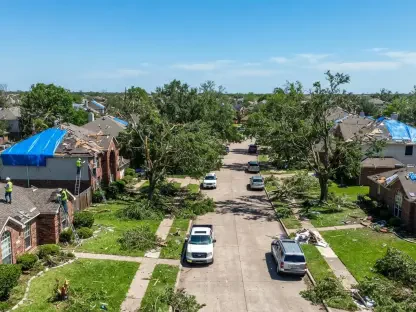

Insurers are now finding that loss estimates can change drastically between model releases, creating volatility in how they manage their own capital reserves. This phenomenon marks a major shift in the risk landscape, as the industry’s primary focus has historically remained on massive, single-event catastrophes like hurricanes. For decades, the reinsurance industry built its infrastructure, modeling, and pricing around these peak perils. However, data from recent years suggests a growing divergence between traditional models and the actual reality of loss events occurring on the ground. While a singular hurricane can cause immense destruction, the cumulative impact of secondary perils, such as severe convective storms and flash floods, has surpassed traditional giants in financial burden. This shift demands a reevaluation of how risk is quantified within the insurance ecosystem, as traditional reliance on high-magnitude event modeling no longer provides a complete picture of the exposures currently facing North American portfolios.
1. The Migration of Risk to Primary Balance Sheets
A significant factor complicating the current landscape is the fundamental shift in how risk is shared between primary insurers and reinsurers. Following the market reset in 2023, reinsurers moved to higher retention levels, effectively pushing more of the financial burden onto the balance sheets of primary carriers. By raising the attachment points of catastrophe treaties, reinsurers have insulated themselves from the frequency of secondary perils, leaving primary insurers to absorb the costs of storms that would have previously triggered reinsurance recoveries. This change has fundamentally altered the volatility profile of primary carriers, who must now find new ways to manage the earnings drag caused by weather events that fall below these higher thresholds. Consequently, the share of catastrophe losses held by primary insurers has grown significantly, making them more vulnerable to the types of events that are currently increasing in both frequency and severity across the country.
This trend is becoming increasingly apparent in the quarterly financial disclosures of major insurance carriers. Reports from several prominent firms indicate that catastrophe losses are being driven not by headline-grabbing hurricanes, but by a series of regional wind and hail events. The volatility is further exacerbated by the inconsistency of the models used to predict these losses. Insurers have observed that different versions of the same modeling software can produce wildly different estimates for the same portfolio of properties. This lack of stability makes it difficult for risk managers to provide clear guidance to stakeholders or to set aside appropriate reserves for future claims. Furthermore, when analyzing less mature peril models like those for urban conflagration or flash flooding, the variance becomes even more pronounced, highlighting a desperate need for more sophisticated and validated analytical tools that can provide a reliable and comprehensive view of risk.
2. Strategic Adjustments for Accurate Risk Assessment
To navigate this environment, insurers are encouraged to move beyond a simple reliance on commercial vendor models. A more effective approach involves merging the output from these software tools with a company’s own historical claims data and internal expertise. By validating model findings against actual loss experience, insurers can gain a much more nuanced understanding of how specific perils affect their unique geographic footprint. This internal calibration allows for the identification of biases within commercial models, particularly in regions where secondary perils are most active. Moreover, verifying these findings prior to taking strategic action ensures that capital is deployed more efficiently and that pricing accurately reflects the true risk of loss. This disciplined approach to data integration transforms raw model output into actionable intelligence, allowing companies to differentiate themselves in a market where precision in underwriting is becoming a primary driver.
Beyond large-scale modeling, there is a growing need for insurers to gather precise, property-level data to refine their risk assessments. Understanding the specific characteristics of a building, such as the age and material of the roof or the presence of impact-resistant features, can significantly change the loss expectation for that property. Detailed information regarding local community safety efforts and resilience measures also plays a vital role in quantifying risk. When insurers collect and analyze this granular data, they move away from broad territorial pricing toward a more sophisticated, risk-based model. This shift encourages property owners to invest in mitigation efforts, as they can see a direct correlation between their resilience investments and their insurance costs. By documenting these building-specific details, insurers can better predict the performance of their portfolios during severe weather events, reducing the likelihood of unexpected loss spikes that impact annual results.
3. Reinsurance Configuration and Market Implications
The final component of a modern risk strategy involves a complete reconfiguration of reinsurance structures to address the accumulation of smaller losses. Traditional occurrence-based coverage is increasingly insufficient for managing the attritional nature of secondary perils. Instead, companies are looking toward annual aggregate policies that provide protection once a cumulative loss threshold is met across the entire year. Additionally, incorporating second-event layers and structures with lower entry points can help mitigate the financial impact of repeated weather events that individually do not breach high retention levels. While these types of covers have become more difficult to secure in a tight market, reinsurers are more likely to offer capacity to those who can demonstrate a high degree of modeling accuracy and data integrity. By aligning reinsurance programs with the actual frequency of modern loss events, insurers can create a more robust financial safety net for their capital.
Ultimately, the shift toward secondary perils necessitated a change in how the entire industry approached disaster management and financial planning. Insurers that successfully integrated their own claims history with advanced modeling software established a significant competitive advantage over those who relied solely on traditional methods. These organizations focused on granular data collection and proactively adjusted their reinsurance structures to account for the cumulative impact of frequent weather events. By rewarding policyholders for resilience investments and refining their underwriting standards, they created a more sustainable path forward for the market. Those who adopted these rigorous data validation techniques and focused on property-level mitigation were better positioned to navigate the volatility of the mid-2020s. Moving forward, the industry learned that the key to stability lay in addressing the frequent, smaller losses with the same level of sophistication previously reserved only for catastrophes.