
The Rainfall Index policy relies on National Oceanic and Atmospheric Administration data to provide financial protection against localized drought conditions. Unlike traditional insurance that requires individual loss adjustments, this program utilizes a sophisticated grid-based system to monitor precipitation levels relative to historical averages. For many producers, especially those managing vast tracts of grazing land or hay production, the unpredictability of weather patterns has long represented a critical threat to economic viability. By shifting the focus from specific on-farm yield measurements to localized climate data, the United States Department of Agriculture has created a more streamlined and objective mechanism for disaster assistance. This approach effectively mitigates the administrative burden on farmers while ensuring that support is deployed rapidly when environmental conditions fall below a specific threshold. As climate variability continues to intensify, these data-driven solutions are becoming indispensable tools for risk management in the modern agricultural sector across various regions.
Strengthening Resilience Through Advanced Data Integration
Technical Precision: The Role of Grid-Based Monitoring
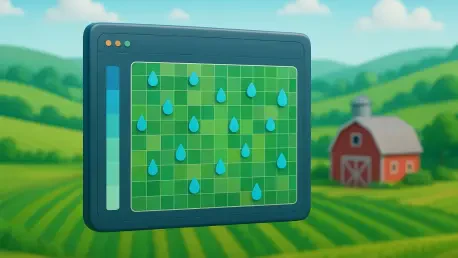
The technical foundation of the Pasture, Rangeland, and Forage program rests on the utilization of 0.25-degree latitude by 0.25-degree longitude grids, which translate to roughly seventeen-by-seventeen-mile segments. This granularity allows for a much more precise assessment of local weather conditions than state-level or county-level averages could ever provide. Each grid is assigned a precipitation index based on historical data going back several decades, establishing a baseline that represents a normal environment for that specific geographical area. When the recorded precipitation for a chosen interval drops below the coverage level selected by the producer, an indemnity payment is triggered automatically. This eliminates the need for a traditional claims adjuster to visit the property, as the payouts are tied directly to the NOAA Climate Prediction Center’s data set. This objective standard ensures that every participant is treated consistently regardless of their specific farming practices or management styles.
Targeted Coverage: Strategic Interval Selection for Producers
Beyond the technical logistics of grid monitoring, the flexibility of the Rainfall Index allows it to be applied to diverse commodities, including apiculture for honey production and perennial forage for livestock. Producers must select at least two non-overlapping two-month intervals throughout the year to customize their protection based on the specific growing seasons of their vegetation. This strategic selection is vital because different grasses and flowering plants require moisture at different stages of their life cycles to maintain nutritional value and volume. If a producer identifies that their late-summer grazing period is most vulnerable to heat stress and lack of rain, they can allocate a higher percentage of their coverage to those specific months. This level of customization ensures that the insurance policy functions as a tailored financial safety net rather than a generic one-size-fits-all product. It encourages proactive planning and better resource allocation for the entire operation.
Strategic Implementation for American Livestock Operations
Analytical Tools: Maximizing Potential Indemnity Benefits
Successfully navigating these insurance options requires a deep understanding of the historical climate patterns specific to a farm’s grid location. From the current year 2026 to 2028, the emphasis on data transparency and accessibility will significantly enhance how producers interact with these federal programs. Farmers are encouraged to utilize online decision support tools that allow them to simulate different coverage levels and interval selections based on historical performance. By analyzing how different scenarios would have performed over the last twenty years, a producer can make an informed decision about where to place their financial risk. This analytical approach is particularly beneficial for large-scale livestock operations that rely on consistent forage production to avoid the high costs of supplemental feed. When rainfall is insufficient, the resulting indemnity payments can be used to purchase hay or transport animals to better pastures, thereby preserving the long-term health of the herd and the financial stability of the farm business.
Future Resilience: Outcomes of Proactive Risk Management
Effective risk management strategies proved to be the most reliable defense against the volatility of environmental shifts during the recent growth cycle. Producers who integrated Rainfall Index policies into their broader financial planning successfully maintained operational continuity despite severe moisture deficits in several key regions. It was determined that the most successful participants were those who collaborated with specialized insurance agents to refine their grid selections and interval allocations. These agents provided critical insights into how the nuances of local topography might interact with the NOAA data points, leading to more accurate coverage outcomes. Moving forward, the adoption of these automated systems facilitated a more resilient agricultural economy that was less dependent on reactive emergency legislation. Industry experts suggested that farmers should continue to update their risk profiles annually to account for shifting micro-climates. This proactive stance empowered producers to manage their lands with greater confidence and ensured that the livestock industry remained robust.