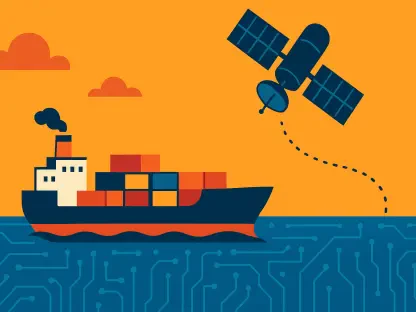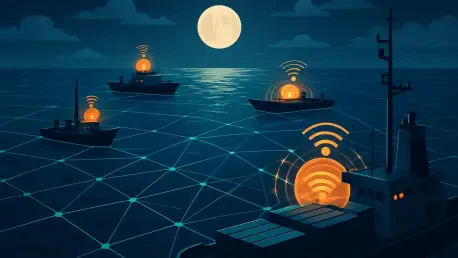

For centuries, the vast expanse of the global ocean has remained a massive blind spot where vessels simply vanish from oversight once they leave the horizon. This persistent opacity has fostered an environment where illegal fishing, smuggling, and sanctions evasion flourish under the cover of isolation. However, the emergence of distributed maritime sensing networks is fundamentally altering this landscape. By transforming individual ships into active data-collection nodes, companies like Quartermaster are building a collective “hive mind” that provides unprecedented visibility into oceanic activities. This shift represents a move away from antiquated self-reporting toward a hardware-enabled reality where the environment itself provides the necessary data. This transition is essential for a global economy that relies on the sea but has long lacked the tools to monitor it with any degree of accuracy or accountability.
The Evolution of Maritime Intelligence and Distributed Sensing
The core principle of distributed sensing lies in the decentralization of observation. Instead of relying on a handful of expensive government satellites or coastal radar stations, this technology utilizes the very vessels traveling the trade routes. Each ship equipped with a sensing suite contributes to a shared network, creating a high-fidelity map of the maritime environment. This collective intelligence allows for the detection of anomalies and patterns that would be invisible to an isolated observer. It effectively turns the global fleet into a massive, interconnected sensor array, ensuring that no single point of failure can blind the system.
Historically, the maritime industry has relied on the Automatic Identification System (AIS), a legacy framework that requires vessels to voluntarily broadcast their location and identity. The fundamental flaw of AIS is its “opt-in” nature; any captain wishing to engage in illicit activity can simply disable the transponder. Distributed sensing eliminates this reliance on honesty. By utilizing active, hardware-enabled data acquisition, the network verifies the presence and behavior of ships regardless of whether they choose to be seen. This modernization is a direct response to the chronic lack of real-time transparency that has historically plagued shipping and environmental monitoring.
Technical Architectures of Modern Sensing Nodes
Integrated Hardware and Weather-Hardened Sensors
The physical foundation of this network is the SmartMast, a sophisticated hardware package designed to survive the brutal conditions of the open sea. These units are equipped with high-resolution optical cameras and advanced radio frequency equipment, all encased in housings capable of withstanding constant salt-spray and extreme temperature fluctuations. What distinguishes these nodes from traditional maritime sensors is the integration of significant local processing power. Instead of merely acting as a passive relay that sends raw data to a central hub, the SmartMast interprets information on the edge. This local analysis allows the system to identify ship silhouettes or recognize distress signals immediately, significantly reducing the bandwidth required for transmission.
The Hive Mind Analytics Platform
Beyond the physical hardware, a robust software engine aggregates data from hundreds of individual nodes to form a granular, distributed network. This analytics layer is the true “intelligence” of the system, synthesizing disparate data points into a continuous field of observation covering millions of square miles. The performance of this platform is measured by its ability to cross-reference visual data with radio signatures in real time. This allows the system to spot “dark” vessels that have disabled their electronic identifiers but remain visible to the cameras of a nearby sensing node. This layer of intelligence ensures that the information is not just voluminous but actionable for stakeholders.
Recent Developments in Maritime Data Verification
The most significant innovation in this space is the shift from subjective, self-reported data to objective, sensor-based verification. In a market where trust has been a scarce commodity, the ability to provide independent proof of a vessel’s location and activity is revolutionary. This objective verification is now being used to enforce maritime sanctions and environmental laws with a level of precision that was previously unattainable. Moreover, the industry is seeing a move toward a “pro-mariner” philosophy. By providing crew members with immediate utility—such as enhanced situational awareness and collision avoidance—startups are incentivizing the adoption of hardware that might otherwise be viewed as a purely intrusive surveillance tool.
Recent influxes of venture capital, such as the $43 million Series A secured by industry leaders, suggest that the “hardware wall” is finally being breached. Historically, investors were wary of the high capital expenditures required to deploy physical sensors across a global fleet. However, the high value of the resulting data has shifted the economic calculus. The scale of current deployments—now reaching over 600 ships—proves that the model is commercially viable. This financial backing allows for rapid engineering iterations, ensuring that the sensors and the AI models supporting them continue to improve in both reliability and sophistication.
Real-World Applications and Sector Deployment
Security, Compliance, and Illicit Activity Monitoring
Governments and insurance providers are the primary beneficiaries of this newfound transparency. The technology is increasingly utilized to identify vessel spoofing, where a ship transmits false location data to hide its entry into restricted zones. By comparing the reported AIS position with the actual visual data captured by the sensing network, authorities can flag discrepancies instantly. This capability is critical for enforcing international law and preventing the “dark fleet” from facilitating illegal trade or unsustainable fishing practices.
Search and Rescue and Operational Safety
The humanitarian impact of distributed networks is already evident, with sensing-equipped vessels participating in numerous maritime rescues. These systems can detect life rafts or debris fields that might be missed by the human eye, especially in low-visibility conditions. This safety feature serves as a powerful catalyst for industry adoption. When a technology provides a clear benefit to the safety of the crew, fleet operators are far more likely to invest in the hardware, creating a virtuous cycle of deployment and safety.
Training Data for Marine Autonomy
High-quality sensor data is the lifeblood of the next generation of marine robotics. The millions of images and data points collected by the network are used to train machine learning models for autonomous navigation. Unlike land-based autonomous driving, which has access to vast amounts of street-level data, the maritime environment has been data-poor. This distributed network is filling that gap, providing the diverse training sets necessary for ships to eventually navigate the high seas with minimal human intervention.
Technical Hurdles and Market Obstacles
Maintaining sophisticated electronics in a salt-water environment remains a primary challenge. Corrosion is an unrelenting force, and hardware failures in remote regions can be difficult and expensive to repair. Furthermore, despite the clear benefits, some low-margin fleet operators remain resistant to new capital expenditures. There is also a regulatory hurdle; while the technology can identify AIS vulnerabilities, it cannot yet entirely replace the legacy infrastructure mandated by international maritime law. The transition will likely involve a long period of hybrid operation where old and new systems coexist.
Future Outlook for Oceanic Intelligence
The integration of advanced computer vision and artificial intelligence will eventually lead to a fully transparent global ocean. As the density of the sensor network increases, the ability for any vessel to conduct “dark” activity will be effectively eliminated. This transparency will have profound implications for environmental stewardship, allowing for the precise monitoring of marine protected areas. Furthermore, the efficiency of the global supply chain will improve as port authorities and logistics companies gain better predictive insights into vessel arrival times and cargo status.
Final Assessment of Distributed Sensing Technologies
The transition from subjective reporting to objective, sensor-driven intelligence represented a definitive turning point for maritime security. The development of weather-hardened hardware and the “hive mind” analytics platform successfully bridged the gap between physical observation and digital data. This movement toward a digitized ocean provided the infrastructure needed to hold bad actors accountable while simultaneously improving the safety of legitimate mariners. Ultimately, the successful navigation of the “hardware wall” by early innovators ensured that the technology moved beyond a niche application and became a foundational layer of global commerce. The emergence of these networks did more than just track ships; it created a new paradigm where the vastness of the ocean no longer served as a sanctuary for secrecy.