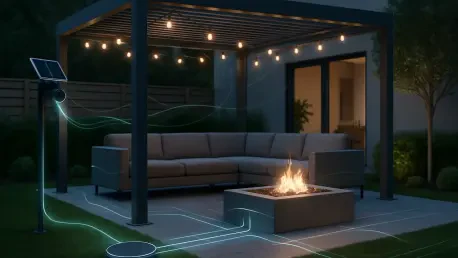

The aesthetic barrier to smart home adoption has finally crumbled as invisible intelligence becomes the pervasive standard for modern residential landscaping and exterior design. Residential automation has historically prioritized function over form, often cluttering facades with bulky plastic sensors and industrial-looking cameras that disrupted the architectural rhythm of a property. However, the current landscape marks a definitive shift toward a philosophy where the primary objective is to maintain a home’s structural integrity while simultaneously expanding its digital capabilities. This transition is significant because it directly addresses the “eyesore” factor—the leading barrier to adoption for design-conscious homeowners—by blending state-of-the-art connectivity with sophisticated exterior materials.
Modern outdoor ecosystems are moving away from conspicuous hardware in favor of integrated solutions that enhance both security and the visual harmony of the property. Industry analysts observe that homeowners no longer settle for bolted-on gadgets; instead, they demand technology that feels like a natural extension of the building’s design. This evolution reflects a broader cultural desire for homes that are intelligent but remain peaceful sanctuaries. By prioritizing “stealth tech,” manufacturers have managed to pack advanced processing power into forms that mimic traditional architectural elements, ensuring that the smartest features are the ones that a casual observer may never notice.
Balancing Aesthetic Sophistication with Advanced External Functionality
Achieving a balance between high-tech utility and aesthetic appeal requires a thoughtful selection of devices that disappear into their surroundings. Designers and tech consultants emphasize that the most successful installations are those where technology serves the lifestyle of the resident rather than dictating the look of the home. This involves moving away from utilitarian, “one-size-fits-all” solutions in favor of customizable systems that can be tailored to the specific textures and colors of a facade. Whether through miniaturization or the use of premium materials like brushed metal and glass, the goal is to create a cohesive environment that feels sophisticated and modern.
The current market offers a wide variety of tools that allow for this seamless integration, provided the homeowner adopts a holistic approach to their exterior design. Rather than viewing security, lighting, and irrigation as separate entities, the modern trend is to consolidate these functions under a single aesthetic umbrella. This strategy reduces the number of visible devices and ensures that every piece of hardware contributes to a unified visual language. Consequently, the outdoor smart home has transitioned from a collection of experimental gadgets into a mature, stylized environment that adds genuine value to the property.
Discrete Entryway Security and the Rise of Hidden Hardware
The front door serves as the focal point of a home’s curb appeal, making it the most critical area for aesthetic preservation and security management. Current trends heavily favor “invisible” smart locks which house their entire motorized mechanism within the door itself, allowing for modern functionality without changing the look of a traditional deadbolt. By hiding the technology within the door frame, homeowners can enjoy features like NFC and proximity unlocking while maintaining the classic appearance of their designer hardware. This approach is particularly popular among those who wish to keep high-end handlesets intact while adding remote scheduling and auto-unlock capabilities to their daily routine.
A significant challenge in this category remains the ongoing tension between battery longevity and device miniaturization, though recent innovations suggest that heavy housings are becoming a relic of the past. Interior-only swaps have gained traction as a middle ground, replacing the thumbturn on the inside of the door while leaving the exterior hardware untouched. This allows for a “smart” entry that is completely undetectable from the street. As power management improves, these hidden mechanisms are becoming more reliable, offering a robust security solution that respects the craftsmanship of the entryway.
Refining the Surveillance Silhouette Through Color and Form
The traditional video doorbell, once criticized for its boxy and intrusive appearance, is undergoing a stylistic makeover to function more as an architectural accent than a security monitor. Leading designs now utilize slim vertical form factors and muted, nature-inspired palettes—such as charcoal, linen, and ash—to complement modern trim and paint colors perfectly. This shift represents a broader industry movement toward “softening” technology through rounded edges and matte finishes, ensuring that surveillance equipment does not detract from a welcoming entryway. By prioritizing visual harmony, these devices offer security that feels like an intentional part of the home’s exterior.
Beyond the doorbell, perimeter cameras are also becoming more discrete through the use of low-profile mounts and integrated lighting. Some of the most advanced systems are now disguised as functional outdoor sconces, combining high-definition video recording with ambient illumination. This dual-purpose design reduces the number of items mounted to the walls, creating a cleaner and more professional look. When security hardware blends into the background, it effectively provides peace of mind without creating the feeling of a fortified compound, maintaining the residential warmth of the property.
Integrating Ecological Connectivity with Specialized Smart Habitats
A disruptive innovation in the outdoor market is the emergence of “purpose-built” smart tech that caters to local wildlife and backyard hobbies. Smart nesting boxes and bird-watching stations utilize solar-powered dual-camera systems to provide high-definition insights into nature without requiring intrusive wiring across the yard. These devices challenge the assumption that smart home tech is purely for human convenience, instead offering a way to manage the local ecosystem and prevent birds from nesting in inconvenient areas. This trend illustrates a regional and cultural shift toward using technology to foster a deeper connection with the environment while maintaining a clean, wire-free yard.
Furthermore, these ecological gadgets are being designed with premium materials like cedar and recycled polymers to ensure they look like traditional garden ornaments. The integration of artificial intelligence allows these systems to identify different species and alert homeowners to rare visitors, turning a simple backyard into an interactive educational space. By focusing on specialized habitats, technology serves to enhance the natural beauty of the landscape rather than obstructing it with plastic and glass. This approach demonstrates that utility can extend beyond security to include environmental stewardship and personal enrichment.
Dynamic Atmosphere Management via Programmable Lighting and Infrastructure
Lighting serves as the bridge between safety and ambiance, and the latest smart iterations allow for total atmospheric control without looking industrial or overly complex. Modern “bistro-style” string lights, featuring filaments that are compatible with universal smart standards, enable homeowners to automate lighting for different times of day or specific events. This level of customization allows for the creation of “scenes” that can instantly transform a patio from a bright dining area into a softly lit lounge. The ability to manage color temperature and brightness through a single interface ensures that the property remains functional and stylized throughout every season.
This level of control extends to the home’s largest surfaces, where automated exterior shades and smart garage interfaces manage solar heat gain and security automatically. By utilizing hidden infrastructure—such as outdoor smart plugs tucked out of sight—homeowners can convert traditional fountains and heaters into automated assets that respond to weather changes or occupancy. These systems work behind the scenes to maintain a comfortable environment, proving that the most effective smart home features are often the ones that operate without manual intervention. This creates a highly responsive exterior that adapts to the needs of the residents while keeping the hardware out of the spotlight.
Strategic Implementation of Integrated Outdoor Systems
The maturation of the smart home into a “stylized home” requires a strategic approach to hardware selection and the installation process. To achieve the best results, homeowners should prioritize devices that support universal communication standards to ensure seamless cross-brand communication and long-term viability. This avoids the frustration of managing multiple proprietary apps and ensures that the entire outdoor ecosystem functions as a single, cohesive unit. Choosing devices that can be updated over the air also guarantees that the home remains at the cutting edge of security and efficiency as new software features become available.
Actionable best practices include opting for solar-integrated cameras to eliminate unsightly power cords and choosing “stealth” locks that preserve existing hardware aesthetics. By focusing on these discrete upgrades, residents can enhance the utility of their property while simultaneously boosting its market value through superior curb appeal. It is also wise to consider the placement of hubs and routers to ensure strong connectivity reaches every corner of the yard without requiring visible signal boosters. A well-planned infrastructure is the foundation upon which a beautiful and intelligent exterior is built, allowing for future expansions as technology continues to evolve.
The Future of the Stylized and Intelligent Exterior
The successful integration of invisible technology and refined aesthetics proved that residential automation did not have to come at the cost of beauty. As the distinction between smart and traditional homes continued to blur, the most effective solutions were those that remained entirely hidden from the casual observer. This evolution prioritized the comfort and security of the resident while ensuring that the property functioned as a serene and beautiful sanctuary. Builders and designers moved toward a standard where technology was woven directly into building materials, such as touch-sensitive surfaces and sensor-embedded glass, making hardware nearly obsolete.
Moving forward, property owners sought out even more integrated materials to further harmonize their digital and physical worlds. The focus shifted from adding devices to a home to selecting architectural components that possessed inherent intelligence. Future considerations for those looking to upgrade their exteriors involved exploring new materials that could provide energy through solar-active siding or manage privacy through smart-tinting windows. Ultimately, the successful fusion of intelligence and design ensured that a home remained secure and efficient without sacrificing the timeless appeal of great architecture.