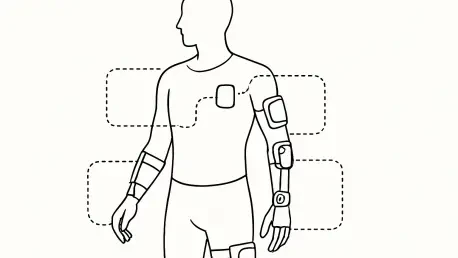

The seamless fusion of biological movement and synthetic intelligence has finally moved from the laboratory to the sidewalk, fundamentally altering how humans perceive physical limits. This evolution marks a departure from the era of notification-centric devices toward a landscape defined by active human augmentation. In 2026, the wearable ecosystem is no longer a collection of peripheral accessories but a cohesive network of “always-on” interfaces that enhance both the physical and cognitive faculties of the user. This review examines the current state of these technologies, analyzing the engineering breakthroughs that have allowed for such rapid miniaturization and the societal shifts occurring as biological and digital identities merge.
Introduction to Modern Wearable Ecosystems
The current technological landscape is defined by the transition from passive data collection to active intervention. In previous years, wearables were primarily diagnostic, recording heart rates or step counts to be reviewed by the user later. Modern systems operate on the principle of a “Closed-Loop” feedback mechanism, where the hardware perceives a physiological or environmental change and provides an immediate physical or informational response. This shift has been facilitated by the maturation of edge computing, which allows complex AI processing to occur directly on the device rather than relying on high-latency cloud connections.
Central to this ecosystem is the concept of the Personal Area Network (PAN). In this framework, different devices—ranging from smart rings to robotic leg supports—communicate through low-energy, high-bandwidth protocols to create a comprehensive map of the user’s state. This interoperability ensures that a metabolic spike detected by a ring can trigger a cooling response in a smart garment or adjust the assistance level of an exoskeleton. The result is a technological “second skin” that functions as an extension of the nervous system, providing a level of integration that was once the domain of science fiction.
The emergence of these technologies is deeply rooted in the need for human-centric solutions in an increasingly complex world. As urban environments become more demanding and the global workforce seeks higher efficiency, the role of technology has moved toward relieving physical strain and cognitive overload. The wearable ecosystem of 2026 provides the infrastructure for this relief, offering tools that adapt to the wearer rather than forcing the wearer to adapt to the machine. This contextual awareness is the hallmark of modern innovation, where the device understands not just what the user is doing, but what the user intends to do next.
Primary Technological Breakthroughs in 2026
Consumer Wearable Robotics and Exoskeletons
A significant milestone reached this year is the democratization of high-torque, miniaturized mechanical support systems. The Hypershell Halo represents a paradigm shift in this category by utilizing a unified architecture that provides power to both the hip and knee joints simultaneously. This is achieved through a high-performance M-series motor that offers a power-to-weight ratio previously unseen in consumer hardware. By employing AI-driven gait analysis, the Halo predicts the user’s terrain and provides the exact amount of torque needed to neutralize the weight of a heavy pack, effectively reducing the metabolic cost of movement during long-distance trekking or daily commutes.
In contrast to the rigid structures of the past, the Ascentiz H Series introduces a modular “Exo-Belt” system that prioritizes flexibility and user choice. This system allows for the attachment of specialized modules—such as the K Module for knee stabilization—only when the activity demands it. This modularity addresses the primary consumer complaint of previous designs: the lack of versatility. By distributing the mechanical load across the L5/S1 vertebrae using a specialized carbon-fiber chassis, the H Series minimizes the risk of secondary injuries, making robotic assistance a safe and practical option for the aging population and outdoor enthusiasts alike.
Clinical-Grade Sensing and Integrated Financial Utility
Smart rings have evolved into sophisticated bio-computers that rival traditional medical equipment in accuracy. Ultrahuman’s Pulsomics data engine is a prime example of this evolution, utilizing raw pulse wave data to build a predictive model of the wearer’s health. By analyzing the subtle variations in the arterial pressure wave, the system can estimate VO2 Max and metabolic efficiency with clinical precision. This data is no longer siloed; it is used to create a “Bio-Digital Twin,” allowing users to simulate the impact of lifestyle changes on their long-term health markers before actually making them.
Simultaneously, the integration of financial utility has turned these health trackers into essential daily tools. Circular’s Ring 3 Pro incorporates secure NFC payment modules that are isolated from the biometric sensors to ensure data integrity. This dual-purpose design addresses the “device fatigue” that often occurs when users are forced to wear multiple gadgets. Furthermore, the inclusion of haptic feedback for AFib detection and medication reminders provides a non-intrusive method for managing chronic conditions. The transition from a novelty item to a secure, clinical-grade interface marks the maturation of the form factor.
AI-Driven Spatial Computing and Smart Eyewear
The maturation of spatial computing has been catalyzed by the integration of powerful Snapdragon platforms and high-brightness MicroLED displays. Devices like the HTC Vive Eagle demonstrate that high-performance AI can be housed in a frame weighing less than 50 grams. These glasses serve as a cognitive layer, offering live translation and “Total Memory Recall,” which uses local AI to index conversations and visual information for later retrieval. The unique aspect of this implementation is the move toward hardware-agnostic AI, where the user can choose which large language model drives their experience, preventing corporate lock-in and fostering a competitive software market.
While the Vive Eagle focuses on productivity and cognitive support, the RayNeo series bifurcates the market by offering a high-fidelity entertainment alternative. The RayNeo GT Max utilizes Tandem MicroOLED technology to project a massive virtual screen, providing a private cinema experience without the bulk of a traditional headset. This separation of “utility-focused” and “immersion-focused” hardware shows a sophisticated understanding of consumer behavior. No longer is there a quest for a single “do-it-all” device; instead, the industry is providing specialized tools that excel in specific environments, from the boardroom to the living room.
Emerging Trends and Industry Shifts
The movement toward “Bio-Digital Twins” is perhaps the most significant industry shift observed this year. This trend involves the continuous synchronization of wearable data with a virtual model of the user’s physiology. By using this model, healthcare providers can perform “what-if” scenarios, predicting how a specific medication or diet will interact with the user’s unique biology. This shift represents a move toward truly personalized medicine, where the wearable serves as the primary data conduit between the individual and the clinical environment.
Furthermore, the democratization of wearable robotics has moved beyond the industrial sector into the mainstream outdoor market. Exoskeletons are now marketed as essential gear for high-altitude trekking and long-distance running, much like specialized footwear or hydration packs. This mainstreaming is accompanied by a trend toward hardware-agnostic AI integration. Users are increasingly demanding the ability to switch between competing artificial intelligence models on a single device, forcing manufacturers to open their ecosystems and focus on hardware quality and sensor accuracy rather than proprietary software moats.
Real-World Applications and Sector Deployment
The deployment of these technologies in the real world has yielded impressive results in diverse fields. In the realm of global business, AI-driven eyewear has bridged communication gaps through real-time, low-latency translation, allowing for fluid negotiations without the need for human interpreters. In the physical realm, the adoption of modular exoskeletons has revolutionized high-altitude trekking and search-and-rescue operations. These devices allow personnel to carry heavier equipment over more difficult terrain for longer durations, directly impacting the success rates of critical missions and expanding the boundaries of human exploration.
Unique use cases have also emerged in the creative and technical sectors. For instance, spatial computing platforms like AIUI Studio are being used to develop applications through “coding-free” visual interfaces. This allows designers and engineers to build complex 3D environments and functional software within the augmented reality space itself, using hand gestures and voice commands. Additionally, the use of smart rings as secure, biometric payment interfaces has seen rapid adoption in smart cities, where frictionless transit and commerce are prioritized. These applications prove that wearables are no longer just for fitness; they are the foundational tools for the modern digital economy.
Technical Challenges and Implementation Obstacles
Despite the rapid progress, several implementation obstacles remain. The primary challenge is the “Energy-Density Wall,” where the demand for high-fidelity displays and mechanical torque exceeds the capacity of current battery technology. Manufacturers must constantly balance the desire for lightweight, ergonomic designs with the need for a battery life that can sustain a full day of active use. While solid-state batteries have begun to enter the market, their high cost and manufacturing complexity prevent them from becoming the universal standard, leading to a reliance on fast-charging solutions and external “power banks” that can diminish the user experience.
Privacy concerns also present a significant hurdle, particularly regarding “always-on” cameras and microphones in smart eyewear. The potential for constant surveillance creates friction in public spaces and regulatory environments. To mitigate these concerns, many companies have adopted “privacy by design” features, such as physical shutters or brightly colored LED indicators that activate whenever the camera is powered. However, the social contract regarding augmented reality is still being negotiated, and navigating the patchwork of global privacy laws remains a complex task for hardware manufacturers aiming for a worldwide release.
Future Outlook and Long-Term Impact
Looking ahead, the convergence of physical and cognitive augmentation is expected to reach a state of total integration. The boundary between where the human ends and the technology begins will become increasingly blurred as non-invasive neural interfaces begin to supplement current touch and voice controls. A major expected breakthrough involves the perfection of non-invasive glucose monitoring, which would transform the lives of millions and solidify the smart ring or watch as a permanent medical necessity. As these sensors become more refined, the emphasis will shift from detecting disease to optimizing performance, moving society toward a proactive health model.
The long-term impact of a society where “augmented human” capabilities are a practical reality cannot be overstated. We are moving toward a future where physical frailty and cognitive limitations can be significantly mitigated through a wearable toolkit. This has profound implications for the labor market, healthcare costs, and even the nature of human interaction. While the challenges of cost and accessibility remain, the trajectory is clear: the integration of technology into the human form is not a temporary trend but a fundamental step in the evolution of our species as a technologically enhanced biological entity.
Summary of Findings and Final Assessment
The review of wearable technology innovations in 2026 revealed a market that successfully moved beyond the stage of niche novelties to provide essential daily tools. The transition from passive tracking to active physical and cognitive assistance marked a turning point in how consumers interact with their electronic environment. The democratization of wearable robotics proved that mechanical augmentation was no longer confined to heavy industry, while the evolution of smart rings into comprehensive clinical platforms demonstrated the power of miniaturized sensing. These advancements were not merely incremental but represented a fundamental rethinking of the relationship between the user and the device.
The 2026 landscape showed that the industry reached a state of technical maturity where the promise of the “augmented human” became a practical reality for the general public. While issues such as battery life and privacy regulations continued to present challenges, the creative solutions implemented by leading manufacturers showed a commitment to building a sustainable and ethical ecosystem. The final assessment indicated that these technologies had a transformative impact on both the global consumer market and the healthcare industry, setting a high standard for future developments. The focus moved decisively toward empowering individuals through sophisticated, integrated, and proactive technological support.