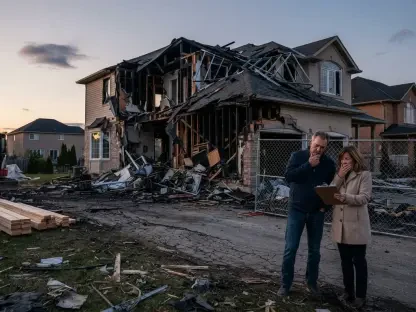

Many homeowners deliberately opt for lower coverage limits to maintain affordability as premiums rise, unknowingly increasing their exposure to total financial loss during a major event. This growing trend has created a massive discrepancy between what property owners believe they possess and the

Conducting annual tabletop exercises that involve the CEO and legal counsel is a critical trait shared by organizations that successfully weather major cyber events. This practice serves as a vital safeguard in a landscape where the rapid democratization of artificial intelligence has completely

Though the Terrorism Risk Insurance Act has been reauthorized multiple times since 2002, it has functioned as a catastrophe bond that has never required a federal payout. In late September of 2026, the United States Senate took a major leap toward preserving this fiscal safety net by passing the

Federal investigators discovered that Medicaid spending on child autism services grew six times faster than the actual number of children receiving those medical treatments over a four-year period. This startling statistic serves as the centerpiece of a comprehensive 87-page report recently

By providing a single source of truth for the entire insurance program, organizations can eliminate the resource-draining manual bottlenecks that have historically plagued risk departments. In the current landscape of 2026, corporate risk managers often find themselves buried under a mountain of

Routine property hazards and large-scale natural catastrophes are being addressed through tools that integrate engineering insights with historical claim trends. This shift toward a more analytical framework comes at a moment when corporate leaders are under immense pressure to justify their