
The transition from standard predictive modeling to autonomous agentic systems is fundamentally rewriting the playbook for risk assessment by enabling machines to act as decision-makers rather than just data synthesizers. This evolution marks a departure from passive language models toward active

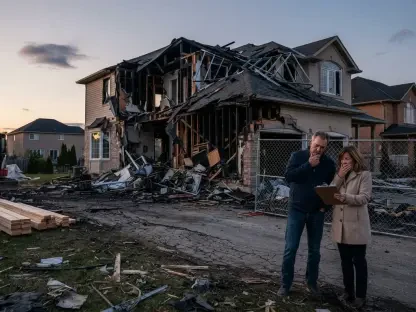
The fundamental promise of the insurance industry hinges entirely upon the seamless execution of a claim during a policyholder’s most vulnerable moment of financial or personal crisis. For decades, the claims department within Managing General Agents (MGAs) functioned primarily as a transactional

When a legacy insurance provider swaps traditional actuarial spreadsheets for the high-octane spectacle of a professional wrestling ring, it signals a profound transformation in how financial services engage with the public. The current state of the insurance industry is undergoing a radical shift,

The traditional concept of a localized crisis has effectively vanished, replaced by a globalized architecture where a single digital tremor or a minor regional supply chain disruption can compromise the economic integrity of distant continents within minutes. This evolution represents a departure

The traditional map of American severe weather is undergoing a dramatic reconfiguration that forces a total reassessment of property risk and emergency management protocols across the nation. For decades, the term "Tornado Alley" conjured images of the vast, open Great Plains, where swirling

The property and casualty insurance industry currently faces an unprecedented volume of data that often exceeds the processing capacity of even the most seasoned underwriting and claims professionals. As organizations navigate the complexities of 2026, the demand for tools that do more than store