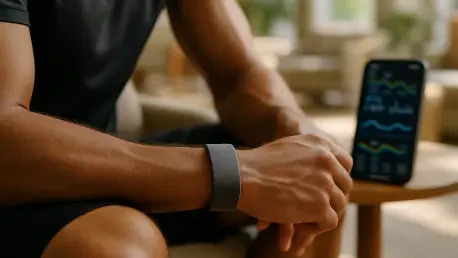

Achieving peak physical performance often requires a delicate balance between high-intensity training and the quiet, uninterrupted physiological recovery that traditional smartwatches often disrupt with constant digital notifications. The introduction of the screenless Fitbit tracker represents a bold pivot toward a more focused philosophy of wellness. By stripping away the luminous display, this device moves the emphasis from reactive interaction to passive, deep-data collection. It serves as a specialized tool for those who find the modern smartwatch ecosystem too noisy for true health optimization.
This design choice signals a strategic shift toward “ambient” technology, where the hardware disappears into the background of daily life. The primary value lies in the removal of the temptation to check wrist-based alerts, which can increase stress rather than alleviate it. Instead, the tracker operates as a silent sentinel, prioritizing performance metrics over social connectivity. This streamlined approach allows users to remain present in their environments while still capturing every heartbeat and breath with clinical precision.
Evaluating the Purpose and Strategic Value of a Screenless Fitbit
Removing the display fundamentally changes the user relationship with the wearable, shifting the experience from active checking to retrospective analysis. This design addresses the growing demand for reduced digital distraction, providing a sanctuary from the “always-on” nature of modern mobile devices. For athletes who prioritize cognitive clarity alongside physical stamina, this device offers a unique compromise that standard smartwatches cannot provide.
The value proposition centers on the idea that health monitoring should not interfere with the activity itself. In a market crowded with multi-functional gadgets, a performance-centric wearable stands out by doing less on the surface to do more in the background. It targets a demographic that values data integrity and battery longevity over the convenience of reading a text message from a wrist-mounted screen.
Product Overview: Design, AI Integration, and Core Functionality
The hardware profile is strikingly minimalist, featuring a low-profile chassis that sits closer to the skin than traditional Fitbit models. Its slender form factor, recently popularized by high-profile athletes like Steph Curry, rivals the Whoop 4.0 in terms of unobtrusiveness. Beneath this understated exterior lies an advanced suite of sensors designed to feed a generative AI health coach, which interprets complex biometric patterns within the mobile app.
This shift to ambient technology ensures that the user interface remains entirely notification-free, fostering a deeper connection to one’s physical state. However, this functionality is deeply intertwined with a paid subscription model. The hardware acts as the gateway to an expansive ecosystem where advanced metrics and personalized coaching insights are unlocked through recurring investment, making the app the primary command center.
Performance Evaluation: Biometric Precision and Real-World Utility
Biometric precision remains the cornerstone of this device, with continuous heart rate and recovery tracking showing high levels of consistency during intensive testing. The absence of a screen allows for a more robust sensor array without the power drain associated with a bright OLED panel. Consequently, the battery longevity far exceeds that of a standard smartwatch, often lasting a full week on a single charge.
The AI-powered coach translates raw data into actionable health advice, moving beyond simple step counts to provide context for sleep quality and strain. By analyzing long-term trends, the system suggests specific adjustments to training loads or rest periods. This data-driven approach turns a passive wearable into an active participant in the user’s long-term wellness strategy.
Analyzing the Advantages and Drawbacks of the Screen-Free Design
The screen-free design is a significant advantage for high-performance athletes who require a rugged, distraction-free tool that fits under sweatbands or athletic gear. It excels at monitoring long-term health trends and offers an wearability factor that makes it easy to forget the device is even there. This unobtrusiveness is essential for capturing accurate sleep data, which is often skewed by the bulk of larger watches.
However, the reliance on a smartphone for every interaction presents a notable limitation for the average user. The lack of real-time visual feedback means there is no way to check pace during a run or view an immediate heart rate spike without reaching for a phone. This barrier to entry may frustrate those accustomed to the instant gratification and utility provided by a traditional display.
Final Recommendation: Is Fitbit’s New Venture Worth the Investment?
Determining the worth of this device requires an assessment of the total cost of ownership, including the mandatory subscription fees. While the hardware is expertly crafted, the long-term financial commitment makes it a professional-grade tool rather than a casual accessory. Compared to the Google Pixel Watch, it offers superior recovery data but lacks the general-purpose utility that most consumers expect.
The final verdict rests on how much one values the “ambient” experience over traditional connectivity. For those focused on the highest levels of athletic performance, the investment is justified by the depth of the AI insights. It stands as a specialized alternative for users who find current smartwatch options too intrusive for a dedicated fitness lifestyle.
Concluding Insights: Who Should Adopt the Screenless Fitbit?
Elite athletes and data enthusiasts who sought to minimize digital noise while maximizing health insights found the most value in this minimalist approach. The device successfully filled a niche for those who preferred a focused, distraction-free environment over a multifunctional gadget. It moved the wearable conversation away from what a device can show and toward what a device can learn about the wearer.
Casual users who required immediate feedback or integrated apps likely felt more comfortable with traditional display-based trackers. The trend toward ambient wearables proved that there was a significant market for quiet technology, but it also highlighted the necessity of a smartphone as a primary interface. Future iterations will likely need to balance this screenless freedom with even more intuitive AI interactions to remain competitive in an evolving health landscape.