
Benjamin Tailor sat down with Simon Glairy to unpack the reality of at‑home red light therapy—where it shines, where it stumbles, and how everyday users can translate specs into results. Though Simon’s roots are in risk management and AI‑driven assessment, he’s spent years cross‑walking those disciplines into consumer wellness, partnering with dermatology and hair‑restoration clinicians to evaluate device design, coverage, and adherence. Across our conversation, we explored how to choose between helmet and cap formats for hair support, why session length and power only matter if you’ll actually use the device daily, and how mixed lasers/LEDs compare to lasers‑only systems in uniformity and hotspot risk. We also covered realistic timelines—early shifts around three months versus more substantial changes over 12–24 months—layering blue and red light masks for acne, and separating subjective “ahh” moments from measurable musculoskeletal recovery on full‑body mats. Simon’s through‑line is practical: verify claims with simple at‑home tests, track progress monthly in the same light and distance, and protect your eyes and skin while keeping the process sustainable.
For someone choosing between a helmet and a cap for hair support, how do you weigh coverage versus comfort and discretion, and what head-shape or lifestyle factors most often tip the decision in your experience?
Start by mapping your thinning pattern and your day-to-day rhythm. A helmet with extended side and back panels—think the broad, wraparound build we tested—gives more comprehensive coverage in a 12‑minute daily hit, which is great if you’re diffuse or have crown plus temporal recession. The trade-off is bulk: even when not heavy, the shell plus interior padding can feel warm and a bit enclosing, especially on oval or narrow heads where contact points are uneven; swappable cushioned liners help, but they don’t change the silhouette. Caps lean discreet: the baseball‑style profile slides into a commute or a coffee run without broadcasting “therapy,” and the most powerful model we used gets sessions done in 6 minutes, which is huge for adherence. If you often wear headphones or hats, a cap integrates more naturally; if you have a larger head or more curvature at the occiput, the helmet’s fixed dome may sit proud and lift off in back, compromising contact. My rule of thumb: pick the format you can see yourself using 5–7 days per week for months on end; coverage on paper means little if you skip sessions because it feels awkward or looks conspicuous.
A 12-minute daily helmet session versus a 6-minute high-power cap session: how do you compare dose, adherence, and long-term outcomes, and what metrics should users track monthly?
Dose isn’t just minutes; it’s minutes multiplied by actual output and coverage. A 6‑minute cap can equal or exceed a 12‑minute helmet if diode power and density are higher over thinning zones, but the helmet’s larger footprint often wins in uniformity. Adherence almost always favors the shorter session—6 minutes slots neatly between brushing your teeth and pouring coffee—while 12 minutes is still doable if the device is comfortable enough to wear while answering emails. For long-term outcomes, the timelines are different: expect subtle changes around three months, and then steadier gains across 12–24 months if you’re consistent. Track monthly with the same setup every time: identical room lighting, camera distance, and hair parting; capture crown and temples from three angles. Add a simple “comb-through count” on wash days, and a tactile note—does your scalp feel less tender, does hair feel denser when you run your fingers backward? If adherence slips below four sessions per week for a month, don’t expect the next month’s photos to move much—consistency is the quiet multiplier.
When a device mixes lasers and LEDs versus using lasers only, how do you assess treatment quality, hotspot risk, and uniformity, and what practical tests can a buyer do at home?
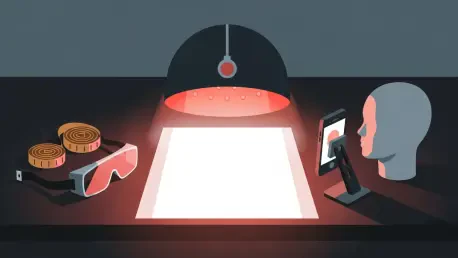
Mixed arrays use LEDs to fill gaps and lasers to punch deeper, which can smooth coverage over curves like the crown and parietal ridge. Lasers‑only caps can be excellent, but spacing matters; if diodes cluster, you’ll feel “peppered” spots of intensity and dimmer valleys. Hotspot risk shows up as tingling warmth in a few coin‑sized zones while the rest feels cool—after one full session, run your fingers across the scalp and note temperature differences; bigger gradients signal uneven delivery. For uniformity, put a sheet of thin white paper inside the device in a dark room; power it on and look for even glow versus bright dots and dead zones. You can also rotate the device 90 degrees mid‑session for two weeks and see if shedding or regrowth patterns even out—that’s a crude but telling field test. If your hair shows “striping” in photos after eight weeks, you’re likely under a patchy map; mixed arrays often reduce that effect by blending beams.
With prices ranging from around $189 to $1,799, how should buyers prioritize budget across build quality, wavelength mix, and support/warranty, and what “red flags” do you look for before purchasing?
Start with fit-for-purpose: a $189 facial wand can outperform a pricey helmet if your only goal is undereye puffiness, while a $1,799 helmet earns its keep if you want full‑scalp uniformity in 12 minutes. For hair, look for stable shells, swappable cushions, and clean wiring; for masks, soft silicone that doesn’t press hard across the nasal bridge; for mats, stitching that doesn’t scratch when you shift. Wavelengths between 600 and 1,100 nm cover most needs—red for skin and follicles, near‑infrared for muscles and joints—so prioritize arrays that deliver those ranges consistently rather than chasing exotic numbers. I like brands that clearly state treatment times—3 minutes per area, 10 minutes, 12 minutes, 20–60 minutes—and back them with FDA clearance where applicable. Red flags: vague specs, no mention of diode type or wavelength, no warranty, and photos that look like stock renders rather than real-world shots. If customer support can’t answer basic questions about session guidance or eye safety, that’s a walk-away for me.
For hair regrowth timelines—early changes at three months versus fuller gains over 12–24 months—how do you set expectations, structure checkpoints, and integrate adjuncts like topicals or microneedling?
I frame month three as “signals, not conclusions”: fewer hairs in the drain, softer baby fuzz at the hairline, or a calmer, less itchy scalp. Months six to twelve are for density and caliber—ponytails feel thicker, crown whorls look less see‑through in bright bathroom light. Twelve to 24 months is where consistency compounds; that’s when uniformity across sides and back fills in, especially if your device has extended panels or a high‑count cap array. Checkpoints every four weeks: standardized photos, comb-through notes, and a short journal on scalp feel and styling effort. Adjuncts can help—topicals layered on after sessions, or gentle microneedling on a separate day of the week—just avoid stacking everything on one night to reduce irritation. Pair a 12‑minute helmet or 6‑minute cap with two adjunct “touches” per week, and give each change eight weeks before judging.
Blue and red light masks for acne promise shorter recovery from breakouts; how do you layer them into an existing routine, avoid irritation, and measure improvements without placebo bias?
A red/blue mask with 10‑minute sessions slides in neatly after cleansing and before actives; on breakout weeks, use it as your anchor and cut back harsher steps. Red at around 633 nm can calm the look of inflammation, while blue near 415 nm targets acne‑prone zones; used consistently, some of us noticed shorter recovery windows over a month, even if “miraculous” change didn’t happen. To avoid irritation, alternate stronger acids or retinoids to off‑days and keep moisturizer steady so the skin barrier doesn’t seesaw. For measuring, designate one cheek as your “control” for two weeks—apply actives equally but spot‑treat only the other side with the mask—and compare healing time and residual redness in photos. Keep the mask snug but not pressing into the nose and cheeks; silicone should feel soft and slightly warm, not hot or stinging. If you’re bothered by light spill to the eyes—this is common without built‑in shields—use comfortable eye cups so you don’t squint, which can bias your perception of comfort and session length.
Full-body mats claim relaxation and recovery benefits; how do you separate subjective calm from objective musculoskeletal gains, and what session length and frequency have you seen work best?
A cordless full‑body mat makes it easy to stack rituals—20, 30, 40, or 60 minutes while stretching or breath‑work—but I separate “I feel mellow” from “my back moves better” with two tests. First, a three‑position touch‑your‑toes check before and after; second, a single‑leg sit‑to‑stand count to spot changes in hip confidence. If 20 minutes leaves you limber for two hours but 40 minutes keeps you loose until evening, write that down; patterns beat impressions. For frequency, 3–4 sessions per week seems to sustain both calm and a sense of recovery; more can feel lovely, but adhere to what you can maintain. Subjectively, many report a warm, cocoon‑like sensation as the mat wraps the back or legs; objectively, look for reduced morning stiffness over two weeks and a steadier workout cadence. If PU leather feels sticky post‑session, drape a thin cotton towel; friction against the skin can color your perception of comfort and cause you to cut sessions short.
A pulsing mode can feel gentler than continuous light; in what scenarios do you prefer pulsing, and how do you guide users to titrate intensity and time without underdosing?
I use pulsing when someone is light‑sensitive, prone to headaches, or new to full‑body exposure—the gentle flicker often feels less oppressive than a steady beam. Start with shorter presets—20 minutes instead of 60—and edge up weekly as comfort grows; your goal is a session that feels quietly warm, never prickly or distracting. For faces, pulsing can make longer routines tolerable when stacking areas; for joints and larger muscles, I switch to continuous once tolerance builds, especially if the mat offers both red (around 660 nm) and near‑infrared (around 850 nm). Underdosing shows up as “no change” after three to four weeks despite good adherence; in that case, increase either duration or switch to continuous for a month before judging. Keep a simple log with duration, mode, and a 1–5 comfort score; you want a steady 4, not a spiky ride. If pulsing still feels buzzy behind the eyes, reduce proximity or use it earlier in the day.
Compact facial wands combine red light, microcurrent, warmth, and vibration; when does this stack outperform single-modality masks, and how should users map a 3-minute-per-area protocol for consistent results?
Stacks shine when puffiness, texture, and tone mingle—think morning undereye bags plus a rough cheek patch. A 4‑in‑1 wand’s warmth and vibration can boost microcirculation while red light at around 630 nm hums along for a modest collagen nudge; the effect is subtle but tangible in a month if you’re diligent. Versus a mask, you trade blanket coverage for precision around folds, the jawline, and the nasolabial groove where masks can float. Map your face into zones: each cheek, forehead, jawline/neck, and the undereye area; three minutes per zone keeps the total around 12–15 minutes, which is easy to pair with a podcast. Keep the head angled at 180 degrees to match contours, gliding slowly so warmth feels even and never hot. If you’re traveling, the wand’s $189 price and pocket size make it the only realistic option; just expect modest gains that grow with consistency rather than a dramatic overnight shift.
Fit and comfort issues—bulky helmets, silicone masks without eye shields—often derail adherence; what ergonomic tweaks, strap adjustments, or add-ons have you seen make the biggest difference?
For helmets, rotate through the included swappable cushions to spread pressure across the crown rather than creating a single hot spot at the vertex; even a few millimeters of padding shift can relieve that “helmet line” feeling. If your device sits high in back, a soft elastic strap under the occiput can stabilize the dome so diodes sit closer to the scalp without pinching the temples. For silicone masks, add contoured eye cups so you can lie back without light spill; the difference in relaxation is night and day. Weight distribution matters too: snag a recliner session—12 minutes for a helmet, 10 for a mask—so gravity helps rather than fights the fit. On mats, a thin towel improves glide and reduces that slightly icky PU texture some people mention, keeping you on target for the full 20–60 minutes. Tiny comfort wins compound into adherence; a device you can forget you’re wearing becomes a device you actually finish.
Given wavelengths commonly span 600–1,100 nm, how do you think about depth of penetration for skin, follicles, and joints, and how should users align device distance and angle to hit targets?
I keep it simple: red in the 600s for skin and follicles, near‑infrared in the 800s for bigger targets like quads and knees. For faces and scalps, close contact wins—helmets and masks are designed to sit flush so diodes bathe the target evenly. For mats and panels, align so light lands perpendicular to the surface you’re treating; if you’re wrapped in a mat, let it hug the curve so there’s no sliver of shadow along hips or knees. With caps and helmets, a snug fit means less light is lost to the room; if you see glow leaking from the sides, adjust the angle or padding. For joints, stack sessions so near‑infrared zones face the tissue you want—20 to 40 minutes can feel like a deep thaw rather than a surface warm‑up. Whatever the format, even coverage beats chasing single bright points; uniform input makes uniform output.
For at-home safety, what specific eye-protection practices, skin-heat thresholds, and photosensitizing-medication checks do you recommend, and how should users respond to mild irritation versus warning signs?
Never stare into bright LEDs or lasers, and if your mask or helmet lacks eye shields, wear comfortable goggles so you can relax rather than squint. Skin should feel gently warm, not hot; if you notice prickling or a “sunburned” sensation after, reduce time the next session and add a soothing moisturizer. Before starting, review any photosensitizing medications with your clinician; when in doubt, ease into shorter sessions—3 to 10 minutes depending on the device—then build. Mild redness or tightness that fades within a couple of hours is a nudge to dial back; persistent redness, swelling, or vision changes are stop signs—pause use and get medical advice. With full‑body mats, avoid sleeping on them; drifting off can turn a 20‑minute plan into an hour you didn’t intend. Safety habits are boring until they save you from an avoidable setback.
How do you verify a device’s real output—irradiance, dose, and coverage—without lab gear, and what practical proxies (time-to-benefit, hotspot checks, thermal rise) can users rely on?
Think like a field tester. First, the time‑to‑benefit proxy: for acne masks and facial wands, look for subtle texture and tone shifts in several weeks to about two months; for hair, scout for three‑month signals; for mats, note if 20–40 minutes softens stiffness the same day. Second, hotspot checks: after a full session, run your fingertips over skin or scalp; isolated warm coins suggest uneven output, while a smooth, low warmth hints at uniformity. Third, thermal rise: use the back of your hand under the device for a minute—does the heat spike fast and fade, or build steadily and evenly? Pair those with standardized photos and session logs; if a $1,199 mat or a $1,799 helmet doesn’t produce consistent, incremental change with regular use, the “paper specs” may not be translating in practice. Finally, coverage tests with paper or a mirror in a dark room reveal dead zones quickly—light should flood, not speckle.
Travel and routine matter; how do you design protocols for commuters or frequent flyers, and what compact or wireless features actually preserve consistency versus just adding complexity?
On the road, simple beats clever. A compact wand with 3‑minute‑per‑area presets or a discreet cap with a 6‑minute session is infinitely more usable in a hotel than a heavy panel. Cordless options are worth their weight: a wireless mat you can roll out for 20 minutes before bed, or a helmet you can wear while scanning emails, removes the outlet hunt and tangle stress. I map “anchor slots” to existing habits—mask after nightly cleanse for 10 minutes, cap during a morning podcast for 6, wand along the jawline before makeup for 3 minutes per zone. Pack eye cups, a thin towel for mats, and a hard case so the device doesn’t take a beating in transit. If a feature steals setup time—complex apps, fiddly straps—you’ll skip it by day three; pick presets you can start with one button.
What is your forecast for red light therapy?
Over the next couple of years, I see at‑home RLT continuing its shift from novelty to staple, with devices clarifying their lanes—hair support helmets and caps tightening session windows to 6–12 minutes, acne masks standardizing around 10 minutes, and full‑body mats offering smart but simple 20–60 minute presets. Expect more thoughtful ergonomics—swappable cushions as standard, better eye shielding for silicone masks, and quieter, cordless systems that move with you. Validation will stay pragmatic: modest skin changes in several weeks to about two months, early hair signals around three months, and more robust gains if you keep going for 12–24 months. Prices will still span $189 to $1,799, but value will sharpen as buyers demand clearer specs, FDA clearances where applicable, and support that answers “how do I use this daily?” rather than just “what’s inside.” If you’re a reader wondering whether to jump in: match the device to your goal, start with the smallest routine you can repeat, and judge progress with the same light, the same angle, and the same patience every month. Consistency, not cleverness, is what turns those quiet red glows into real‑world change.