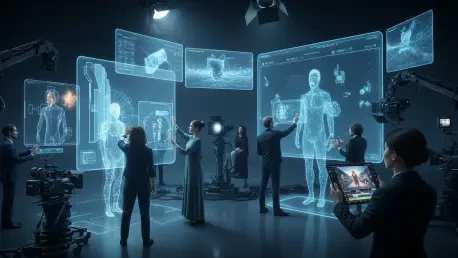

The intersection of synthetic media and live performance has reached a critical tipping point where the distinction between captured reality and generated imagery is becoming functionally obsolete. Real-time AI filmmaking represents a significant advancement in the global entertainment sector, moving beyond the limitations of traditional post-production. This review explores the evolution of the technology, its key features, and the profound impact it has had on modern applications. By embedding generative models directly into the production pipeline, creators have shifted toward a “generate it in the moment” philosophy that fosters spontaneous digital creativity.
The Convergence of Generative AI and Cinematic Production
Real-time AI filmmaking is an emerging discipline that integrates generative artificial intelligence directly into the live production workflow. Unlike traditional methods where AI is relegated to the editing suite, this technology functions as a core engine for world-building and character rendering. It has emerged from the intersection of neural rendering and performance capture, allowing filmmakers to bridge the gap between physical acting and digital environments. In the broader technological landscape, it represents a shift from static toolsets to dynamic, collaborative AI agents that participate actively in the creative process.
This integration matters because it eliminates the long waiting periods typically associated with visual effects rendering. When a director can see the final digital environment while the actors are still on stage, the creative decision-making process becomes much more intuitive. This implementation is unique because it treats AI not as a separate layer added later, but as a foundational participant that responds to the physical nuances of a live performance, creating a unified production environment.
Core Technologies Powering the Real-Time Shift
Luma Agents: Multi-Modal Generation
The backbone of this new workflow lies in advanced AI agents capable of processing text, image, video, and audio simultaneously. These agents function as creative technologists, translating directorial intent into high-fidelity digital assets without the need for manual asset creation. By utilizing multi-modal frameworks, these tools can generate complex textures and soundscapes on the fly. This ensures that every digital element remains synchronized with the live-action performance, providing a level of cohesion that was previously impossible in rapid production cycles.
Real-Time Hybrid Filmmaking: Virtual Sets
A major breakthrough in this field is the hybrid approach that merges high-budget performance capture with modern virtual production environments. This system allows for the immediate adjustment of lighting, digital props, and set geometry while filming human actors. By utilizing AI to map digital faces onto performers while preserving original micro-expressions, studios can achieve photorealism without the “uncanny valley” issues typically associated with traditional CGI. This capability allows for a more authentic connection between the digital mask and the human soul behind it.
Industry Evolution: From Tools to Production Houses
The most notable trend in this sector is the transition of AI developers into active content creators. Companies are no longer just selling software; they are establishing dedicated studios to produce original programming. This shift is driven by the need to demonstrate that AI can handle long-form storytelling and high-scale cinematic projects. We are seeing a move toward specialized production hubs where technologists and veteran filmmakers work side-by-side, signaling a shift in industry behavior from skepticism toward active, daily integration.
By controlling the production environment, tech companies can refine their algorithms based on the practical needs of a film set. This feedback loop is what makes this implementation unique compared to standard software developers who remain detached from the artistic process. The evolution from tool-maker to story-teller signifies a maturing market where the technology is finally being measured by the quality of the narrative it supports rather than just its technical novelty.
Real-World Applications and Global Streaming
Democratizing High-Scale Cinematic Content
Real-time AI is being deployed to produce ambitious, high-scale projects for global platforms. A prime example is the production of historical and Biblical dramas, where vast, ancient landscapes can be recreated digitally at a fraction of the cost of physical location scouting. By focusing on underserved markets, such as faith-based content, AI production houses are proving that high cinematic standards are attainable for niche audiences. This democratization allows stories that were once deemed too expensive to be told with the visual grandeur they deserve.
Cost-Efficient Blockbuster Alternatives
The primary use case for this technology is the reduction of financial barriers that have long plagued Hollywood. Traditional blockbuster production involves astronomical costs that often stifle creative risk-taking and limit the diversity of voices in the industry. Real-time AI allows studios to produce multiple high-quality films for the budget of a single traditional feature. This efficiency enables a more diverse range of stories to reach the screen without compromising on the visual spectacle that modern audiences expect from global streaming services.
Technical Hurdles and Market Obstacles
Despite its potential, real-time AI filmmaking faces significant technical hurdles regarding the consistency of AI-generated frames and the immense computational power required for zero-latency rendering. If the digital environment flickers or the character’s face shifts inconsistently, the immersion is broken. Furthermore, regulatory issues surrounding the use of digital likenesses and the impact of AI on industry labor remain contentious topics. These obstacles suggest that while the technology is powerful, its successful adoption depends on navigating complex ethical and logistical landscapes.
Market adoption is also influenced by the need for established filmmakers to adapt to non-linear workflows. This necessitates ongoing development in user interface design and collaborative software to bridge the gap between engineers and artists. The shift requires a new type of literacy among crew members, who must now understand how to prompt and guide AI agents in real time. Without this human-centric development, the technology risks becoming a sophisticated toy rather than a reliable professional tool.
The Future of AI-Driven Storytelling
The trajectory of AI filmmaking points toward a future where “real-time” becomes the standard for all levels of production. We can expect breakthroughs in autonomous cinematography and more sophisticated physics engines that allow AI to simulate complex natural phenomena instantaneously. Long-term, this technology may decentralize the film industry, allowing smaller independent studios to compete with major conglomerates on a visual level. This shift will likely lead to a more saturated and diverse global media landscape where the quality of the idea outweighs the size of the bank account.
Assessment of the AI Filmmaking Landscape
Real-time AI filmmaking moved beyond the experimental phase and became a foundational element of the creative workflow. This review highlighted that while the technology was still evolving, its ability to synthesize performance capture with generative speed was revolutionary. The state of the industry suggested that AI did not replace filmmakers but instead provided a more efficient production model that maintained high cinematic standards. As the technology matured, its impact on reducing financial barriers and expanding creative possibilities redefined the global entertainment economy.
Moving forward, the focus must shift toward establishing standardized ethical frameworks for digital likenesses and investing in specialized training for the next generation of “AI cinematographers.” Studios should prioritize the development of local, edge-computing solutions to reduce the latency issues inherent in cloud-based rendering. By addressing these technical and moral challenges early, the industry ensured that real-time AI became a sustainable pillar of creative expression. The transition was not merely about saving money; it was about unlocking a new vocabulary for visual storytelling.