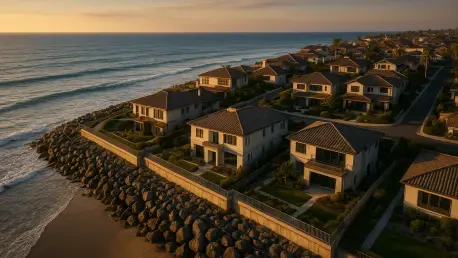

The financial pressure of rising premiums has forced 30% of respondents to slash nonessential spending on dining, travel, and personal entertainment. This shift reflects a deepening crisis within the residential housing market where the cost of annual protection often rivals the underlying mortgage payment itself. As severe weather events increase in frequency, insurers have adjusted their risk models to reflect a more volatile reality, leading to a significant spike in annual costs. For families living in coastal or fire-prone regions, these expenses have morphed from a manageable utility into a major financial barrier to homeownership. Beyond the immediate hit to household budgets, the surge in premiums has started to cool the demand for real estate in historically popular markets. Buyers are now scrutinizing the long-term viability of insurance coverage before committing to a purchase, realizing that a cheap mortgage might be offset by an astronomical policy. This economic realignment suggests that the era of low-cost coverage has ended, replaced by a complex environment where geographic risk dictates financial stability.
The Structural Shift: Factors Driving Premium Volatility
Modern insurance carriers have abandoned generalized actuarial tables in favor of granular, real-time data analysis powered by artificial intelligence and high-resolution satellite imagery. This technological leap allows companies to inspect the integrity of a roof or the proximity of flammable brush without ever sending a physical inspector to the site. While this increases efficiency, it also removes the human element from risk assessment, often leading to immediate premium hikes or non-renewal notices for properties that do not meet rigorous new standards. Additionally, the global reinsurance market, which provides a safety net for local insurers, has significantly raised its rates in response to catastrophic losses across the globe. From 2026 to 2028, these secondary market costs are expected to climb even further, directly impacting the monthly payments of average homeowners. The convergence of expensive construction labor and the rising price of raw materials like lumber and steel further complicates the issue, as the cost to rebuild a home today far exceeds valuations from just a few years ago.
Homeowners who successfully navigated this turbulent period focused on aggressive mitigation strategies to lower their liability profile. They invested in fortified roofing systems and smart home sensors that detected water leaks before they caused major damage, which helped secure essential premium credits. Many residents also explored higher deductibles to keep their monthly cash flow stable, effectively betting on their own preparedness. Legislative bodies eventually responded by expanding state-backed insurance pools and offering tax incentives for structural improvements that met updated safety codes. These programs provided a necessary cushion for low-to-middle-income families who were otherwise at risk of losing their homes due to unmanageable overhead. Ultimately, the transition toward a more resilient housing infrastructure proved to be the only sustainable path forward. By prioritizing long-term durability over short-term savings, communities were able to maintain their property values and stabilize local economies. The lessons learned during this period of high volatility redefined the relationship between property ownership and environmental risk management.