
Property owners often mistake their insurance for a comprehensive safety net, failing to realize that accidental damage coverage is a standard feature in only 23 percent of policies. This fundamental misunderstanding often results in significant financial distress when claims for common household mishaps are summarily denied by providers. Current data from the Financial Conduct Authority suggests that approximately thirty percent of home insurance claims are rejected annually, highlighting a substantial gap between consumer expectations and the legal realities of their contracts. In 2026, the complexity of modern living—ranging from home-based side businesses to the sharing economy—has made it even more difficult for policyholders to maintain adequate coverage without active management. Rather than viewing insurance as a set-it-and-forget-it utility, owners must recognize it as a bespoke financial product that requires regular updates and meticulous attention to detail. Failure to bridge this knowledge gap can transform a supposed safety net into a costly liability during a crisis.
Property Maintenance and Accidental Damage
Maintenance: Sudden Versus Gradual Deterioration
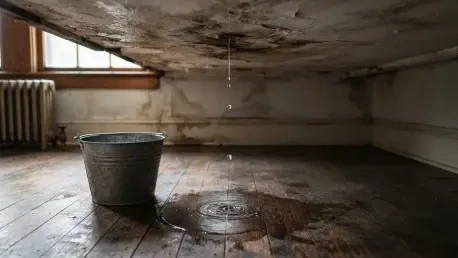
A primary point of contention in insurance claims involves the distinction between sudden events and gradual deterioration. Standard policies are designed to cover “sudden and accidental” occurrences, such as a burst pipe that floods a room instantly. However, they almost universally exclude damage resulting from “wear and tear,” such as a slow leak from a poorly maintained shower seal or a roof that has decayed over several years. Insurers expect property owners to maintain their homes in a good state of repair, and any failure to do so is viewed as negligence. When a claim is filed for water damage, investigators often look for signs of long-term seepage or pre-existing rot. If the evidence suggests that the damage could have been prevented through routine maintenance, the claim is rejected. This reality places a significant burden on the homeowner to conduct regular inspections and address minor issues before they escalate into major, uninsurable losses.
Workmanship: Professional Versus DIY Repairs
While the rise of home improvement culture has encouraged many to take on DIY tasks, uncertified electrical or plumbing work poses a massive risk to insurance validity. Most policies contain specific “shoddy workmanship” clauses that allow insurers to deny claims if a loss is directly linked to substandard repairs performed by a non-professional. For instance, if a homeowner attempts to rewire a kitchen and a subsequent electrical fire occurs, the lack of professional certification can lead to a total claim rejection. This exclusion also applies to major structural modifications performed without the necessary permits or professional oversight. Even if the work was done to a seemingly high standard, the absence of a paper trail from a licensed contractor provides insurers with a legal avenue to void coverage. Consequently, the temporary savings achieved through DIY labor can be entirely wiped out by the denial of a catastrophic claim, making professional intervention a much safer long-term financial strategy.
Occupancy Rules and Financial Obligations
Vacancy: Understanding Unoccupied Property Clauses
Standard home insurance policies contain strict “unoccupied” clauses that are often overlooked by homeowners who travel frequently or own secondary residences. Generally, if a property is left empty for more than thirty to sixty consecutive days, the coverage is either severely restricted or lapses entirely. From the perspective of an insurer, a vacant home represents a significantly higher risk because minor issues like a small leak can go undetected for weeks, leading to extensive structural damage. Furthermore, unoccupied properties are statistically more likely to be targeted by burglars or vandals. In 2026, as remote work allows for more extended travel, policyholders must be vigilant about these timeframes. To maintain protection during long absences, it is often necessary to negotiate an extension with the current provider or purchase a specialist unoccupied home policy. Failing to disclose that a house is empty for an extended period is a common pitfall that results in the immediate denial of any subsequent claims.
Deductibles: The Financial Impact of Excess Payments
A common misconception among policyholders is that an accepted insurance claim results in a full reimbursement for the financial loss. In reality, every policy includes an “excess” or deductible, which is the specific amount the homeowner has agreed to pay out of pocket before the insurer contributes. For example, if a storm causes $2,500 worth of damage and the policy has a $500 deductible, the insurance company will only issue a payment for $2,000. This structural element of insurance means that filing small claims is often financially counterproductive. Beyond the immediate out-of-pocket cost, every filed claim has the potential to increase future annual premiums and may lead to the loss of a “no-claims” discount. Consequently, homeowners should carefully evaluate the total value of a loss against their deductible and the potential long-term cost of higher insurance rates. In many cases, it is more economical to pay for minor repairs independently rather than involving the insurance provider and risking a future price hike.
Documentation and Off-Premises Limitations
Proof: Addressing Mysterious Disappearance Claims
Insurance companies maintain a sharp legal distinction between confirmed theft and what is categorized as a “mysterious disappearance.” Without a police report or physical evidence of a crime, such as a smashed window or a forced door lock, insurers are likely to reject claims for missing high-value items. This is particularly common with jewelry, watches, and portable electronics that may have been misplaced rather than stolen. To secure a payout, the burden of proof rests entirely on the claimant, who must demonstrate that the item was in their possession recently and that its loss was the result of a covered peril. Maintaining a digital inventory of valuables, including high-resolution photographs and scanned receipts, is an essential practice for any homeowner. Without this documentation, it becomes nearly impossible to prove the value or even the existence of an item after it has gone missing. Providing a consistent paper trail is the most effective way to ensure that a claim for high-value personal property is processed successfully.
Mobility: Protection for Items Outside the Home
A significant trap for modern consumers involves items that are regularly taken outside the physical boundaries of the home. By default, most contents insurance is site-specific, meaning that items are only covered while they are inside the insured property. Statistics show that only about fifteen percent of policies include “personal possessions cover” as a standard feature, which extends protection to laptops, mobile phones, and bicycles when they are in transit. If a high-end smartphone is stolen at a café or a bicycle is taken from a public rack, the claim will likely be rejected unless a specific off-premises rider was purchased. As the value of portable technology continues to rise in 2026, this coverage gap represents a major financial vulnerability. Homeowners must proactively check their policy documents to see if their mobile assets are protected globally. In many instances, high-value gadgets require separate, specialized riders that specify the replacement value and the geographical limits of the coverage to ensure full financial protection.
Commercial Use and Security Requirements
Business: Bridging Residential and Commercial Risks
The widespread adoption of remote work and the growth of the side-hustle economy have created a significant insurance gap for many residents. While standard residential policies typically cover basic telecommuting for an employer, they do not extend to the operation of a private business from the home. If a homeowner stores commercial inventory, hosts clients on the premises, or uses specialized industrial equipment for a business venture, they are effectively operating outside the scope of a standard home policy. Failure to disclose these activities can lead to a total rejection of any claim, even if the loss is unrelated to the business itself. Insurers argue that the presence of a business changes the risk profile of the property, necessitating professional liability or business contents insurance. In 2026, as more people pursue entrepreneurial ventures from their living rooms, the risk of non-disclosure has never been higher. Transitioning to a policy that explicitly recognizes business use is the only way to ensure that both the home and the business assets remain protected.
Security: Maintaining Mandatory Locking Standards
Insurers place high importance on physical security, and any failure to comply with the specific locking standards outlined in a policy can result in a claim rejection. This is particularly true for outbuildings like sheds and garages, which are often targets for the theft of expensive lawnmowers, power tools, and bicycles. If a theft occurs from an outbuilding that was left unlocked or was secured with a lock that does not meet the insurer’s technical requirements, the claim will be denied on the grounds of negligence. Many policies require five-lever mortice deadlocks on all external doors or specific shackle-guarded padlocks for outbuildings. Homeowners often assume that any lock is sufficient, but the fine print usually mandates specific certifications. In the event of a burglary, claims adjusters will inspect the points of entry for signs of forced entry and verify that the hardware met the policy’s criteria. Ensuring that all security measures are in full compliance with the insurance contract is a simple but vital step in preventing a legitimate loss from becoming an unrecoverable financial blow.
Future Considerations for Enhanced Protection
To avoid the pitfalls of claim rejections, property owners transitioned toward a more active and informed approach to policy management. The historical model of allowing insurance to auto-renew without an annual review proved to be a significant liability in 2026. Instead, homeowners began to prioritize detailed documentation, including digital inventories and professional maintenance logs, to satisfy the evidentiary requirements of modern insurers. By proactively disclosing changes in property use, such as the start of a home business or the installation of new landscaping, individuals ensured that their coverage remained valid and comprehensive. The most successful policyholders were those who treated the fine print not as a hurdle, but as a roadmap for maintaining their financial security. Ultimately, the shift from passive consumption to active risk management allowed for a more robust protection of personal assets. Addressing the nuances of water damage and security standards effectively secured investments against the unpredictable nature of homeownership.