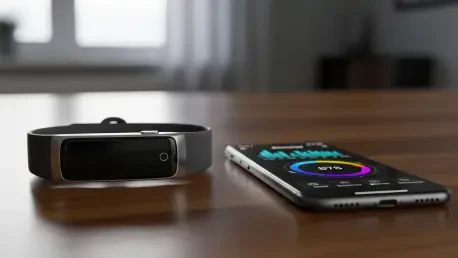

The arrival of the Google Fitbit Air signals a definitive pivot in the global wearable technology market as the company moves away from the distraction of traditional screens to prioritize pure biometric intelligence and generative AI integration. This device is not merely a piece of hardware but a strategic statement intended to recapture a market share that has drifted toward either multifunctional smartwatches or specialized high-performance monitors. By stripping away the digital interface, Google is gambling on a philosophy of “invisible” technology, where the value lies entirely in the depth of data processing rather than visual output. This transition marks a departure from the legacy of step counting and enters an era where the wearable acts as a silent sentinel, collecting high-fidelity biometrics to be interpreted by the most advanced artificial intelligence models available to consumers today. For a price point of $99.99, the device introduces a sophisticated health ecosystem to a broader demographic, potentially disrupting the subscription-heavy models of its competitors.
A New Era of Minimalist Health Intelligence
To understand the current trajectory of the industry, one must acknowledge the significant shift in consumer sentiment regarding digital well-being and the pervasive nature of notification fatigue. For years, the market was dominated by the desire for more: more pixels, more apps, and more connectivity on the wrist. However, a growing segment of health-conscious users has begun to view the smartwatch as a source of stress rather than a tool for relief. Google’s acquisition of Fitbit has finally culminated in a product that addresses this irony by focusing on a “wear-and-forget” experience. The Fitbit Air represents the end of the “step-counting” epoch and the beginning of a period defined by contextual health awareness, where the hardware disappears into the user’s daily life while the software provides the actual utility.
This strategic move is particularly relevant as the wearable landscape becomes increasingly polarized between the all-in-one utility of devices like the Apple Watch and the hyper-focused, screen-free approach of the Whoop strap. By positioning the Fitbit Air at a competitive sub-one-hundred-dollar price, Google is effectively democratizing high-end health data. This approach leverages the massive data processing power of the Google Cloud, turning raw biometric signals into a narrative about a user’s physical state. The focus has moved from “what happened” to “what should happen next,” creating a proactive rather than reactive relationship between individuals and their personal health metrics.
The Integration of Gemini and the Google Health Coach
Transforming Passive DatFrom Tracking to Active Guidance
The most significant technological leap within the Fitbit Air ecosystem is the transition from simple data logging to the delivery of active, personalized guidance. Historically, fitness trackers provided a historical record of movement, leaving the interpretation of that data entirely to the user. The introduction of the Google Health Coach, powered by the Gemini AI suite, changes this dynamic by analyzing a complex web of variables including sleep architecture, heart rate variability, medical history, and even environmental factors. When the AI detects a suboptimal recovery period, it does not just report a low score; it synthesizes this information with local weather reports to suggest a restorative indoor activity, such as a specific stretching routine or a guided meditation.
Multimodal Interaction: The Synergy of Voice and Data
The synergy between Google’s hardware and its Gemini Pro and Ultra models creates a multimodal experience that redefines the concept of a “personal trainer.” By utilizing the connected smartphone as the primary interface, users can engage in a real-time dialogue with their health data through voice or text. This level of interaction allows for immediate adjustments to training loads or recovery protocols, making the device feel like a living assistant. For power users already embedded in the Google ecosystem, the inclusion of Health Premium as a perk with existing AI subscriptions further cements the brand’s lock-in strategy, ensuring that the device remains the central hub for all physical and mental health monitoring.
Revolutionary Computer Vision: The End of Manual Data Entry
One of the most persistent barriers to consistent health tracking has been the friction of manual data entry, particularly regarding nutrition and complex gym routines. The Fitbit Air addresses this through the integration of advanced computer vision within the Google Health app. Users can now snap a photograph of a whiteboard at a CrossFit box or a picture of a meal, and the AI will automatically parse the information to update the user’s logs. This capability transforms the smartphone camera into a sophisticated sensor that understands the context of the user’s environment, effectively removing the tedious clerical work that often leads to user abandonment of fitness platforms.
Future Shifts: The Rise of Screen-Free Performance Tracking
As the industry moves forward, the “wear-and-forget” philosophy is expected to gain significant traction among both professional athletes and casual wellness enthusiasts. The Fitbit Air reflects a trend where the hardware becomes secondary to the intelligence of the software, paving the way for even more specialized sensors. Future iterations are likely to focus on non-invasive monitoring of blood chemistry or chronic stress levels, providing medical-grade insights without the need for a digital screen. As AI models become faster and more localized, these devices will evolve from reactive tools into proactive monitors that can anticipate health issues before the user even experiences physical symptoms.
Strategic Takeaways: Navigating the Modern Health Landscape
For the modern consumer, the arrival of the Fitbit Air emphasizes that the true value of a wearable is no longer found in its physical display but in the sophistication of its data processing. To maximize the benefits of this technology, users should lean into the full ecosystem, utilizing the AI’s ability to interpret visual data and provide voice-interfaced coaching. The real investment is moving toward the subscription-based intelligence that gives the hardware meaning. For professionals in the health and fitness space, this shift necessitates a greater understanding of how AI-driven insights can complement human coaching, creating a more data-informed approach to client wellness and performance optimization.
Redefining the Value of Fitness Wearables
The Fitbit Air successfully challenged the notion that a device required a screen to be considered “smart” by modern standards. By blending high-precision sensors with the massive computational power of Gemini AI, the platform provided a compelling argument for a more mindful approach to technology. This launch underscored a broader transition from the era of simple activity tracking to a future centered on life optimization through contextual awareness. As the device integrated into the daily routines of millions, it redefined expectations for the industry, proving that the most profound insights often came from listening to the data rather than simply looking at a wrist. The shift toward intelligent, screen-free hardware established a new benchmark for how technology could support human health without dominating human attention.