
Simon Glairy is a premier strategist in risk management and Insurtech, recognized for his ability to navigate the volatile intersection of private enterprise and global conflict. As the geopolitical landscape shifts and state actors begin to designate high-tech commercial assets as legitimate military targets, his perspective offers a crucial look at how multinational corporations must reassess their physical and financial footprints in the Middle East. This discussion examines the escalating tensions between the U.S. and Iran, the specific threats leveled against Elon Musk’s operations, and the broader implications for the insurance industry when commercial technology becomes a pillar of modern warfare.
When commercial satellite services provide essential connectivity for aerial drones and unmanned strike vessels, how has the line between civilian infrastructure and military necessity been permanently blurred?
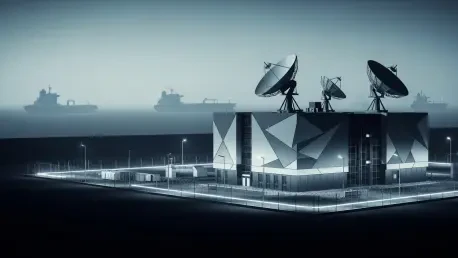
Tehran’s recent declaration regarding Starlink signals a grim evolution where the digital backbone of a commercial company becomes its greatest tactical liability. By facilitating the movement of surveillance craft and strike vessels, these satellite ground stations are no longer viewed by adversaries as mere utility hubs, but as active components of a weapon system. The Iranian state media outlet Fars has made it clear that the Republic reserves the right to strike any facility managed by Musk, effectively stripping away the “civilian” shield that usually protects corporate assets. We are witnessing a high-stakes scenario where the support of military operations transforms a commercial internet provider into a frontline participant, making every regional ground station a high-priority target.
With threats targeting oil export hubs like Kharg Island and the use of massive missile barrages, what are the specific operational challenges for companies currently maintaining physical infrastructure in these zones?
The operational environment has become incredibly suffocating for any entity with hardware on the ground, especially with the looming threat of the U.S. seizing major oil infrastructure. When a nation’s central export hub like Kharg Island is publicly identified as a target for seizure, every surrounding commercial operation feels the heat of potential destruction and the immediate loss of logistics. The recent exchange—starting with the downing of a U.S. Army helicopter and spiraling into retaliatory strikes where $250 million worth of bombs were dropped in a single night—creates a theater where traditional safety protocols are rendered useless. Companies are watching their regional investments face the very real prospect of being caught in a missile exchange that has already seen the U.S. firing retaliatory strikes on Tuesday and additional missiles on Wednesday.
How should multinational firms like Apple or Nvidia interpret these threats to their regional assets, and what does this mean for the future of war risk and political violence insurance?
These companies are now facing an existential crisis regarding their insurance portfolios because standard commercial policies often exclude active military conflict or acts of state-sponsored aggression. The fact that Iran’s Revolutionary Guard has explicitly named tech giants like Microsoft, Google, and Nvidia alongside SpaceX suggests a massive expansion of what constitutes a “war target” in the eyes of a sovereign state. For a risk manager, the question isn’t just about a damaged office; it is about whether a policy will respond when a state-run media outlet formally designates your commercial operation as a military objective. We are looking at a radical hardening of the insurance market where “political violence” coverage might no longer be enough to cover assets positioned in a region where peace deals are actively disintegrating and ceasefires are increasingly tattered.
What is your forecast for the security of commercial technology infrastructure in the Middle East?
The era of “neutral” technology is coming to an abrupt end as commercial platforms become inseparable from the modern battlefield’s command and control structures. We should expect a significant increase in the cost of operating in the Middle East, as the “war risk” premiums for tech companies will likely skyrocket or become entirely unavailable for those directly supporting defense initiatives. As the U.S. continues to warn of “very hard” strikes and maneuvers against central hubs like Kharg Island, the physical safety of commercial staff and the integrity of data centers will remain under constant, state-level threat. Ultimately, any company whose hardware provides a tactical advantage to a military force must now prepare for that hardware to be treated as a combatant, facing the same kinetic risks as a naval vessel or a fighter jet.