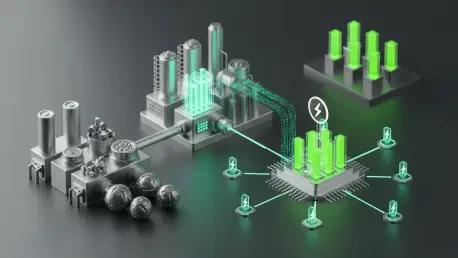

The global transition toward electrification has forced battery recycling and material production into the epicenter of modern industrial strategy while testing the limits of rapid startup growth. Redwood Materials, founded by Tesla co-founder JB Straubel, has long been viewed as the frontrunner in securing a domestic supply chain for critical minerals. However, the company is currently navigating a pivotal transformation characterized by a significant organizational restructuring and a strategic pivot toward energy storage. This timeline explores the evolution of Redwood Materials, examining how recent leadership departures and workforce reductions reflect a broader shift in the company’s operational philosophy. Understanding this trajectory is essential, as the firm’s ability to streamline its operations will likely determine whether it can maintain its dominance in an increasingly volatile and competitive market.
From Rapid Expansion to Operational Calibration: A Timeline of Transformation
2017 to 2021: The Foundation and Rapid Scaling
Redwood Materials was established with the ambitious goal of creating a circular supply chain for electric vehicle batteries. During this period, the company focused on securing partnerships with major automotive manufacturers and ramping up its recycling capacity. Leveraging JB Straubel’s reputation and technical expertise, the firm attracted significant venture capital, positioning itself as the primary solution for North America’s battery waste problem. The leadership team during this era was heavily populated by former Tesla executives, bringing a “move fast and break things” mentality to the battery materials sector.
2022 to 2023: Diversification and Global Ambition
As the demand for energy storage systems began to rival the electric vehicle market, Redwood expanded its vision beyond recycling. The company announced massive investments in Nevada and South Carolina to produce anode and cathode components. This phase was defined by hyper-growth, with the headcount surging to support multiple billion-dollar construction projects. While the company secured a $2 billion loan commitment from the Department of Energy, the rapid scaling began to stress the organizational structure, leading to a complex web of management layers that would eventually require refinement.
Early 2024: The Executive Exodus and Strategic Realignment
The landscape began to shift as several high-level executives, primarily those with Tesla pedigrees, announced their departures. The exit of Chief Operating Officer Chris Lister, alongside vice presidents of supply chain, mechanical engineering, and manufacturing, signaled a fundamental change in the company’s internal dynamic. This period marked the beginning of a deliberate “right-sizing” initiative. Internal communications emphasized the need to simplify the reporting structure and move away from the frantic growth pace of previous years in favor of a more disciplined, industrial approach.
Mid-2024: Workforce Reduction and the Energy Storage Pivot
In a move to ensure long-term fiscal viability, Redwood Materials reduced its workforce by approximately 10%, affecting 135 employees. This restructuring was not merely a cost-cutting measure but a strategic realignment to prioritize the burgeoning energy storage business. Following the layoffs, the company solidified key agreements with firms like Rivian and Crusoe to provide refurbished battery packs for grid-scale storage. This transition highlights a shift from being a pure-play recycling firm to becoming an integrated energy solutions provider, prioritizing lean operations over headcount expansion.
Analyzing the Impact of Consolidation and Industry Volatility
The most significant turning point in Redwood’s recent history is the transition from a Tesla-inspired growth model to a leaner, more traditional industrial framework. This shift suggests an acknowledgment that the “startup” phase of the battery economy is ending, replaced by a period where operational efficiency and unit economics are paramount. A recurring theme in this evolution is the move toward corporate discipline in response to a market that has seen several competitors face insolvency. While the loss of veteran leadership creates a temporary vacuum, it also removes the “management bloat” that often hinders large-scale industrial execution. The gap that remains is the challenge of maintaining innovation speed while operating with a significantly reduced workforce.
Competitive Pressures and the Future of Energy Storage
The strategic shakeup at Redwood Materials must be viewed through the lens of a global market characterized by fluctuating lithium prices and aggressive international competition. By pivoting toward energy storage, Redwood is hedging its bets against the cyclical nature of the electric vehicle market. Expert analysis suggests that the grid storage sector offers a more stable revenue stream, particularly as renewable energy adoption accelerates. However, misconceptions persist regarding the layoffs; while some see them as a sign of weakness, others argue they are a proactive defense mechanism against the “capital burn” that has plagued the green tech sector. As Redwood integrates its new, streamlined team, its success will depend on its ability to execute on long-term infrastructure projects without the safety net of its former, expansive executive suite. Stakeholders monitored the transition to ensure that technical milestones remained synchronized with the updated fiscal goals. Future considerations involved the integration of more automated processing technologies to offset the smaller workforce, while leadership focused on securing additional contracts within the utility sector to anchor their storage initiatives.