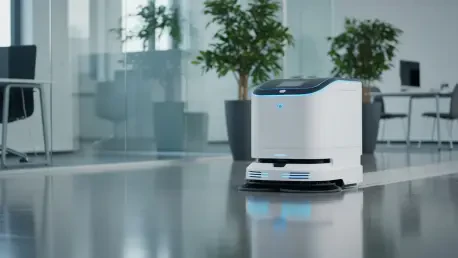

The transition from automated vacuuming to truly autonomous, decision-making domestic floor care has finally materialized, effectively ending the period of “babysitting” our robotic appliances. This fundamental shift is driven by the arrival of specialized neural processing units within high-end cleaning hardware, allowing machines to interpret their surroundings rather than just reacting to physical obstacles. We are no longer dealing with simple collision sensors; the current market focuses on real-time chemical and visual analysis to manage household maintenance. This review examines the technological convergence of artificial intelligence and mechanical engineering that has redefined the expectations of a clean home, moving the industry from scheduled sweeping to active, data-driven remediation.
The Shift Toward Intelligent Floor Maintenance
Modern domestic robotics has moved past the era of passive pathing, where devices followed rigid grid patterns or semi-random bounces to cover surface area. Today, the core principle is “active intelligence,” a system where the robot utilizes a sensor fusion of LiDAR, structured light, and AI vision to prioritize cleaning based on the actual condition of the floor. This evolution is rooted in the realization that a floor’s cleanliness is not uniform; different zones require vastly different levels of mechanical intervention and moisture application.
The relevance of this shift lies in how hardware now supports software-driven logic. Older models treated every square foot of hardwood the same way, which often resulted in either under-cleaning high-traffic mudrooms or over-wetting delicate finishes in less-used areas. By moving toward data-driven cleaning, manufacturers have solved the efficiency gap. These systems now identify the specific density of dust and the viscosity of spills, allowing the unit to allocate its limited battery and water resources with surgical precision, thus extending the operational life of the device while improving the overall hygiene of the living space.
High-Performance Hardware and Algorithmic Detection
Specialized AI-Driven Stain Detection
The introduction of the Shark PowerDetect UV Reveal and the Dyson Spot+Stain Ai has brought two distinct philosophies of detection to the forefront of the industry. The Shark model utilizes a specific UV sensor array that illuminates organic traces—such as pet urine or food proteins—that are invisible to the human eye under standard Kelvin temperatures. This hardware choice is critical because it addresses the “invisible dirt” problem, ensuring that a floor that looks clean is actually sanitized. The AI interprets the ultraviolet reflection to adjust the suction and the agitation speed of its rollers automatically.
In contrast, the Dyson approach leans heavily into high-definition camera arrays and visual recognition algorithms. By processing frames at high speeds, the Dyson system categorizes stains by texture and color, distinguishing between a harmless dry leaf and a potentially problematic coffee spill. This visual processing allows the machine to decide whether it needs to deploy a localized scrubbing maneuver or if a standard sweep will suffice. However, this reliance on cameras introduces a dependency on ambient lighting, whereas the UV-based systems tend to be more consistent across various times of the day and night.
Advanced Navigational Intelligence and Mechanical Design
Physical design remains the ultimate bottleneck for even the most intelligent AI, yet recent innovations like “NeverStuck Technology” and extendable side-arms are closing this gap. The ability of a robot to navigate complex environments—like those with deep-pile rugs or chairs with sled-style legs—is a primary differentiator. Shark’s mechanical lifting system allows the chassis to physically rise to clear obstacles that would traditionally trigger a “stuck” error, showcasing an integration where the AI controls the machine’s height as well as its path.
Mechanical versatility is further demonstrated through the use of extendable brush arms that deploy only when the AI detects a 90-degree corner or a baseboard edge. This is a significant improvement over fixed-brush designs, which often lack the reach to clean into the deepest recesses of a room. By dynamically changing its physical footprint, the hardware responds to the environment’s complexity. These advancements prove that navigational intelligence is no longer just about avoiding a wall; it is about manipulating the robot’s physical form to ensure that no part of the floor remains inaccessible.
Current Innovations in Domestic Robotics
The field is currently witnessing a move toward specialized scrubbing systems that replace the traditional “vibrating plate” mops of previous generations. Real-time image processing now allows robots to identify specific debris types, such as cereal versus fine dust, and adjust their internal filtration and brush torque accordingly. This level of specialization is essential for maintaining diverse modern flooring, from porous stone to high-gloss laminates, without causing abrasive damage over time.
Furthermore, the integration of ultraviolet sensors for detecting organic traces has moved from industrial laboratory settings into the domestic sphere. This innovation represents a commitment to actual sterilization rather than cosmetic tidiness. As these sensors become more affordable, the industry is seeing a democratization of deep-cleaning capabilities. Modern units are also beginning to share map data with other smart home devices, creating a holistic ecosystem where the vacuum can signal the air purifier to increase its intake when high levels of dust are kicked up during a cleaning cycle.
Real-World Applications and Industrial Deployment
The practical application of these technologies is most evident in homes with open-plan layouts and mixed-material flooring. In such environments, the AI must constantly transition its logic from “high-suction vacuuming” on rugs to “high-moisture scrubbing” on tile. The ability to perform deep-corner cleaning and the automated remediation of stubborn residues—like dried syrup or pet messes—removes the need for manual pre-treatment. Users no longer have to scrub a spot by hand before the robot can handle the rest of the room.
Beyond typical residential use, these advanced units are finding a niche in smaller commercial spaces such as boutique retail stores and dental offices, where consistent hygiene is a regulatory necessity. The automated detection of spills in these environments allows the machine to act as a first responder, preventing the spread of debris or liquid across high-traffic areas. This deployment highlights the reliability of modern AI systems; they are now trusted to operate in professional settings without constant supervision, managing complex furniture layouts with the same ease as a domestic living room.
Technical Hurdles and Market Obstacles
Despite the rapid pace of development, the industry faces significant physical clearance issues. While AI can identify a mess under a low-profile sofa, the physical height of the LiDAR towers or camera housings often prevents the robot from reaching the source of the problem. This mismatch between visual capability and physical accessibility remains a point of frustration for users who expect a “set-and-forget” experience but still find dust bunnies accumulating under mid-century modern furniture.
Cost also remains a barrier, with flagship models often exceeding the price of a high-end laptop. This high entry point is a result of the specialized sensors and powerful onboard processors required to run neural networks locally. There is also the challenge of building user trust through transparency. When a robot decides to skip an area or spend ten minutes scrubbing a single tile, the user needs to understand the “why” behind the action. Current development efforts are focused on improving app interfaces to better communicate the AI’s decision-making process, ensuring that the machine’s behavior is perceived as intelligent rather than erratic.
The Future of Autonomous Cleaning Systems
Looking ahead, the trajectory of autonomous floor care is moving toward enhanced machine learning models capable of better stain categorization through multi-spectral imaging. We can expect more compact, versatile hardware that utilizes flexible chassis designs to squeeze into spaces that are currently unreachable. The next breakthrough will likely involve fully closed-loop maintenance systems where the base station not only cleans the robot but also orders its own replacement parts and detergent refills through encrypted IoT protocols.
The long-term impact of these truly autonomous systems will be a fundamental shift in household management. As the machines become more capable of “self-healing”—fixing their own brush tangles or clearing their own clogs—the manual labor associated with owning a robot vacuum will vanish. We are approaching a point where the appliance is no longer an item to be maintained, but a permanent utility of the home, as reliable and invisible as the water heater or the HVAC system.
Summary of the Technological Landscape
The current technological landscape favored models that successfully merged high-performance mechanical agility with a communicative, transparent AI interface. The most effective systems did not just clean; they informed the user of their progress and adapted their physical state to meet the unique challenges of a modern home. This review identified that while visual detection and UV sensors have significantly increased the efficacy of stain remediation, the physical height of the units and the initial cost of entry remained the most significant drawbacks for the average consumer.
The industry moved significantly toward a standard where the robot acted as an intelligent custodian rather than a simple motorized broom. Looking forward, the focus must shift toward standardizing the communication between different smart home platforms to allow these autonomous cleaners to function within a larger domestic data network. Future designs should prioritize miniaturization of the sensor stacks to resolve clearance issues, ensuring that the AI’s reach finally matched its vision. The evolution observed suggests that as hardware becomes more malleable and software more discerning, the goal of a completely hands-free domestic environment was finally within reach for those willing to invest in the upper tiers of the market.