
Walking through a home where the lights, thermostats, and locks actually speak the same language shouldn’t feel like a miracle reserved for the ultra-wealthy. For years, the dream of a fully automated living space remained trapped behind the high walls of proprietary software ecosystems that forced consumers to choose a single brand and stick with it. This fragmentation created a persistent “walled garden” frustration, where a specific smart bulb would refuse to communicate with a motion sensor or a voice assistant from a different manufacturer. Ikea intervened in this chaotic landscape by prioritizing universal connectivity, signaling a definitive shift away from complex, expensive, and exclusionary installations. By offering hardware that works across various platforms, the company successfully transitioned smart technology from a niche hobby for tech enthusiasts into a mainstream standard for every modern household.
The democratizing effect of this strategy cannot be overstated, as it moved the focus from high-margin luxury to high-volume utility. While other companies sought to lock users into subscriptions or specific hardware cycles, the approach here emphasized flexibility and long-term value. This shift effectively ended the era of proprietary dominance, allowing the average person to experiment with automation without a massive upfront investment. The result is a marketplace where the technology serves the home, rather than the home serving the limitations of the technology.
The Strategic Pivot to Matter and Thread
Central to this evolution is the adoption of the Matter protocol, an industry-wide standard that serves as a universal translator for smart devices. This pivot toward interoperability means that a product is no longer defined by the specific app it requires, but by its ability to function within a larger, cohesive environment. The Matter standard ensures that whether a device is purchased from a furniture giant or a boutique tech firm, it will play nicely with the existing infrastructure. This level of cross-brand cooperation was once considered impossible, yet it has now become the gold standard for any manufacturer hoping to remain relevant in a connected world.
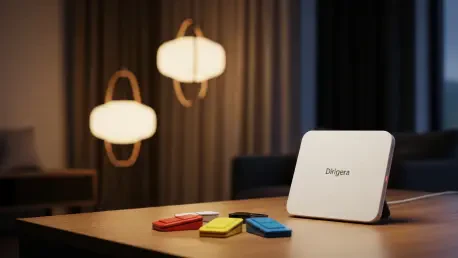
The Dirigera Hub acts as the central nervous system for this entire ecosystem, providing a future-proof foundation that connects various gadgets through Thread technology. Unlike traditional Wi-Fi connections that can become congested, Thread creates a mesh network that is both self-healing and incredibly energy-efficient. This ensures low-latency communication and high network stability, which are critical when a home scales up to dozens of connected devices. By collaborating with tech giants, Ikea ensured that its hub facilitates seamless integration with Apple Home, Amazon Alexa, and Google Assistant, giving users the freedom to control their environment through any interface they prefer.
Stability in a smart home is often measured by how often a user has to “reboot” their system, and the combination of Matter and Thread has largely eliminated that chore. The Dirigera Hub manages these connections locally whenever possible, reducing the reliance on cloud servers and improving response times for simple tasks like turning on a kitchen light. This strategic investment in underlying infrastructure allowed the company to move beyond simple gadgets and create a reliable platform that rivals professional-grade automation systems in everything but price.
Hardware Highlights: Affordability Meets Functionality
The hardware itself demonstrates a unique balance where aggressive pricing meets high-level functionality, particularly within the Kajplats lighting range. This collection features 11 variations, spanning from classic Edison-style filaments for aesthetic ambiance to high-output color bulbs for modern utility. With entry-level smart bulbs priced significantly lower than those of premium competitors, the barrier to entry has vanished for budget-conscious homeowners. These bulbs do not just offer binary on-and-off states; they provide granular control over temperature and hue, allowing for a level of atmospheric customization that was previously quite costly to achieve.
Complementing the lighting is the Bilresa remote series, which reintroduces tactile control to the smart home through magnetic, multi-colored physical switches. In an age where everything is controlled by a screen, the return of the physical button provides a level of accessibility for children, guests, and those who simply prefer a “real” switch. These remotes are designed to be both functional and decorative, featuring a variety of finishes that allow them to blend into the decor rather than looking like sterile pieces of technology. The magnetic backing and included mounting plates mean these switches can be placed exactly where they are needed, whether that is on a refrigerator or a bedside table.
Automation is further enhanced by the Myggspray motion sensors, which offer a practical solution for room occupancy and time-based lighting schedules. These small, unobtrusive devices are capable of triggering complex sequences, such as illuminating a hallway at ten percent brightness during the night to prevent glares. By focusing on these fundamental building blocks—light, control, and sensing—Ikea created a comprehensive toolkit that addresses the most common needs of a connected home. The aggressive pricing of these components encourages users to outfit their entire living space rather than just a single room.
User Experience and Ecosystem Integration
Navigating the digital side of this ecosystem reveals a surprising departure from the brand’s reputation for complex physical assembly, often referred to as the “hex wrench” effect. The Ikea Home Smart app prioritizes an intuitive user interface that simplifies the pairing process, turning what used to be a frustrating technical task into a few taps on a screen. This ease of use is a direct result of the Matter bridging technology, which allows devices to appear instantly in third-party apps once they are configured in the native environment. This “plug-and-play” experience is essential for bringing smart home technology to a wider audience that may not have the patience for manual troubleshooting.
Design aesthetics have also taken a leap forward, moving beyond purely utilitarian white plastic to include finishes like “tomatoey red” and “soft green.” This change reflects a broader understanding that smart devices are part of the home’s decor and should be treated with the same stylistic consideration as a chair or a lamp. Real-world performance data indicates that these devices handle brightness levels and dimming transitions with a level of smoothness that was once reserved for high-end lighting designers. The sensors, too, have matured, with improved algorithms that reduce false triggers and ensure that the automation feels natural rather than robotic.
Furthermore, the integration with third-party ecosystems means that users are never locked into a single way of interacting with their home. A homeowner could use an Apple Watch to check if the lights are off, an Amazon Echo to set a timer, and the Ikea app to fine-tune the color of the living room lamps. This fluidity is the hallmark of a mature smart home, where the technology fades into the background and the focus remains on the comfort and convenience of the residents. The bridge between the physical and digital worlds has finally become sturdy enough for everyday use.
Practical Steps for Building Your Matter-Ready Home
Establishing a robust Matter-ready home required a strategic approach that began with the optimal positioning of the Dirigera Hub to ensure maximum coverage across the entire floor plan. Once the foundation was set, homeowners were encouraged to mix and match Ikea sensors with high-end third-party equipment, such as premium speakers or specialized smart plugs, without fear of incompatibility. This modularity allowed for a gradual upgrade path, where a user could start with a single room and slowly expand their network as their needs grew. Utilizing high-quality rechargeable solutions for battery-operated remotes and sensors was a key step in reducing the environmental footprint and maintenance requirements of the system.
The final layer of customization involved setting up complex “scenes” that transitioned the home environment from high-energy daylight productivity to a soft, relaxing atmosphere for evening hours. These scenes allowed multiple devices to react simultaneously to a single command, such as closing the blinds and dimming the lights when a “movie night” mode was activated. This level of synchronization turned individual gadgets into a cohesive system that actively responded to the lifestyle of the inhabitants. By following these practical steps, users moved away from the novelty of individual smart bulbs and toward a truly integrated living experience that offered both efficiency and peace of mind.
Ultimately, the expansion into a Matter-compatible ecosystem provided the necessary tools to turn any residence into a responsive environment. The focus shifted toward long-term sustainability and user autonomy, ensuring that the technology remained a helpful assistant rather than a source of frustration. As the industry continued to move toward open standards, the groundwork laid by these affordable and accessible devices set a new benchmark for what consumers should expect from their homes. This transition was not just about better gadgets, but about a fundamental rethinking of how humans interact with their physical surroundings in an increasingly digital age.