
The modern workplace is undergoing a seismic shift where the once-stagnant machinery of insurance claims has been replaced by fluid, intelligent systems that anticipate needs before a human can even articulate them. For decades, the workers’ compensation sector operated under a mountain of paper and rigid protocols, but the arrival of sophisticated machine learning models has transformed the landscape into a data-driven ecosystem. This transformation is not merely about replacing old software with new algorithms; it is a fundamental restructuring of the relationship between technology and the human workforce. As these intelligent agents move from passive storage repositories to active decision-shaping partners, the industry faces a critical crossroads that determines whether the future will be defined by cold automation or a more empathetic, human-centric approach. By integrating these tools, organizations are seeking to refine recovery paths for injured employees while simultaneously streamlining the complex risk management processes.
Bridging the Gap: The Shift from Passive to Active Intelligence
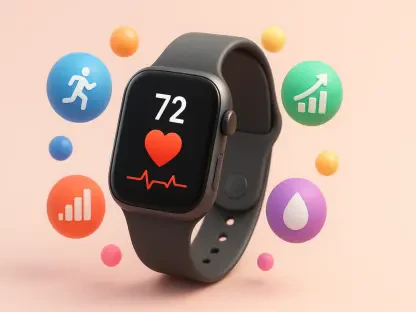
Looking at the technological progression from the start of the decade through 2026, it is clear that the industry has successfully transitioned away from the rudimentary digitization efforts of the past. In those earlier years, technological investments were focused on basic document management and the transition from physical filing cabinets to cloud-hosted databases, which served as little more than digital storage bins. These systems lacked the inherent intelligence to interpret the data they held, leaving adjusters and medical reviewers to manually sift through hundreds of pages of records to find a single relevant medical note. Today, the infrastructure has evolved into a proactive network where the Internet of Things and wearable sensors provide a continuous stream of real-time health data. This shift allows for the immediate identification of high-risk cases that might otherwise have languished in a queue, ensuring that the technology now drives medical outcomes rather than just tracking them.
This newfound capability to act in real-time has fundamentally altered the convergence of workplace safety and claims management by breaking down the traditional silos that separated these two disciplines. Instead of waiting for a report to be filed days after an incident, modern systems utilize computer vision and environmental sensors to detect anomalies as they happen, providing an immediate feedback loop for both the employer and the insurer. The integration of such technology means that the data is no longer a static historical record but a living map that guides the recovery journey of every injured worker. Consequently, the heavy lifting of trend analysis and risk identification is now performed by algorithms that can process millions of data points in seconds, which allows human professionals to step back from the minutiae and view the entire claims lifecycle with a level of clarity that was previously impossible to achieve. This transition marks the end of the “passive” era in insurance technology.
Alleviating the Burden: Addressing the Adjuster Caseload Crisis
The necessity of this technological surge is underscored by the immense pressure currently placed on human claims adjusters, many of whom are struggling to manage an unprecedented volume of complex files. Recent industry analysis shows that caseload creep has reached a tipping point, with a significant majority of professionals reporting that they feel chronically overwhelmed by the sheer scale of their administrative responsibilities. When a human expert is forced to spend the bulk of their day performing data entry or scanning through repetitive medical invoices, their capacity to apply professional judgment to the most critical aspects of a claim is severely diminished. This exhaustion not only leads to higher turnover rates within the industry but also results in slower recovery times for the injured workers who rely on their expertise. The deployment of artificial intelligence is now viewed as the primary mechanism to mitigate this burnout by automating the “noise” that clogs the daily workflows.
By removing high-volume, low-complexity tasks from the human desk, the industry is creating the necessary space for the implementation of the biopsychosocial model of care. This approach recognizes that the physical recovery of a worker is deeply intertwined with their psychological well-being and social support structures, factors that a machine cannot fully navigate on its own. When an adjuster is freed from the shackles of manual documentation, they can devote their energy to the empathetic and strategic aspects of claim management, such as conducting meaningful check-ins with an injured employee or negotiating complex settlement terms. This synergy between machine efficiency and human empathy ensures that the technology serves as a powerful workforce multiplier rather than a replacement. The goal is to return the human element to the center of the insurance experience, allowing professionals to focus on the nuances of human behavior and motivation that are essential for successful health outcomes.
Real-Time Action: The Evolution of Decision Support Systems
Moving beyond the era of simple predictive analytics, the current environment has embraced dynamic decision support systems that provide actionable insights at the precise moment they are needed most. Earlier iterations of analytics were often retrospective, offering static reports that highlighted past failures without providing a clear path forward for active cases. In contrast, modern AI-driven summarization tools can instantly synthesize vast quantities of medical history and legal documentation into concise, prioritized briefs. This capability is particularly transformative for “takeover files,” where an adjuster must quickly understand the complex history of a long-term claim inherited from a colleague. Instead of spending days reading through old notes, the professional receives a prioritized list of critical issues and recommended next steps. This shift ensures that the “next best action” is always visible, reducing the latency that frequently leads to escalating costs and prolonged disability durations.
These advancements are also redefining the underwriting process by distinguishing between standard risks that can be automated and complex risks that require deep human analysis. Through the use of straight-through processing, low-risk business submissions are now evaluated and approved automatically if they meet a rigorous set of predefined criteria, which significantly speeds up the policy issuance timeline. This automated vetting process does not eliminate the underwriter but rather reallocates their specialized knowledge to the most challenging and high-stakes scenarios. When the “noise” of routine applications is filtered out, underwriters can focus their expertise on high-value accounts where professional judgment and nuanced risk assessment provide the greatest competitive advantage. The result is a more balanced ecosystem where human energy is reserved for situations where it can add the most value, while the speed of automation handles the repetitive volume that once slowed the entire pipeline down.
Governance and Strategy: Designing a Human-Centric Technological Future
As generative AI and other advanced models continue to mature, industry leaders have adopted a cautious and governed approach to ensure that these tools are implemented ethically and effectively. There is a growing recognition that moving too quickly through the “hype cycle” can lead to significant risks, including algorithmic bias or the erosion of institutional knowledge. To prevent these pitfalls, many organizations have established strict governance frameworks that treat AI as a core business capability that must be monitored and audited for consistency. The focus has shifted from simply adopting the newest shiny tool to solving specific, measurable problems such as reducing loss costs and improving the accuracy of medical evaluations. By maintaining a disciplined strategy, the industry ensures that every technological deployment is aligned with the broader goal of providing transparent and fair outcomes for all stakeholders. This structured oversight has become a fundamental component.
Looking back at the progress made throughout the middle of the decade, the industry successfully navigated the complex transition toward a model where intelligence was embedded into every operational layer. Professionals recognized that the ultimate success of these initiatives depended on the delicate balance between technological precision and the warmth of human interaction. Strategic roadmaps focused on training the workforce to operate alongside AI agents, ensuring that the transition felt like an evolution of skills rather than a displacement of roles. Organizations prioritized the development of user-friendly interfaces that made complex data accessible to everyone, from the desk adjuster to the corporate risk manager. By fostering a culture of continuous learning and ethical accountability, the workers’ compensation sector moved toward a future where efficiency did not come at the cost of compassion. This integrated approach eventually proved that technology could indeed humanize the recovery process by allowing machines to process the data.