
Simon Glairy is a leading voice in the evolution of insurtech, bringing a deep understanding of how AI-driven assessment can mitigate risk in high-stakes environments. His expertise lies in identifying technologies that don’t just offer flashy features but provide tangible safety improvements that can be quantified for enterprise-level risk management. Today, we delve into the Viture Helix, a new AI eyewear platform that signals a significant shift from consumer gadgets to specialized industrial tools. Our conversation covers the transition toward purpose-built safety hardware, the power of Nvidia-backed processing, and how real-time compliance logging is poised to revolutionize pharmaceutical and clinical workflows.
Viture has traditionally been associated with consumer-facing displays, but the Helix represents a sharp pivot toward industrial and clinical settings. How does this change the way we think about wearable technology in professional risk-heavy environments?
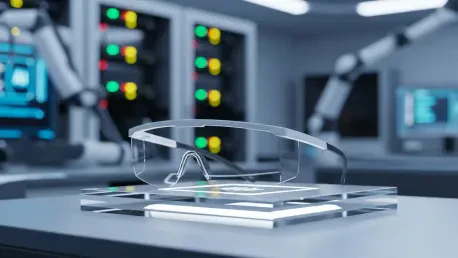
This shift reflects a growing realization that wearables must serve a functional, safety-first purpose to truly gain a foothold in the enterprise market. By designing the Helix to meet industrial safety standards, Viture is moving beyond simple visual overlays and into the realm of mission-critical hardware. The inclusion of a 12MP camera and a four-microphone array ensures that every detail of a worker’s environment is captured with high fidelity to avoid costly errors. In my field, removing the need for a tethered smartphone is a game-changer because it eliminates potential snag hazards and connectivity hurdles in a wet-lab or clinical setting. This autonomy allows the hardware to function as a standalone safety shield rather than a secondary accessory.
The Helix platform utilizes Nvidia’s XR AI technology to stream video feeds directly to the cloud or edge for processing. What are the practical implications of offloading this much computational power to an external platform during active labor?
Leveraging the Nvidia XR AI platform allows these glasses to act as a sophisticated visual co-pilot without the bulk of heavy onboard processing. The hardware uses integrated Wi-Fi and Bluetooth 5.3 to maintain a constant stream of first-person video, which is then analyzed by multimodal models to monitor a worker’s hand movements. This allows the system to cross-reference actions against complex standard operating procedures in real time and issue voice corrections through stereo speakers. It transforms a standard pair of safety glasses into an active participant in the workflow, catching errors before they become accidents. By streaming this data, the system ensures that the most recent safety protocols are always being applied to the task at hand.
We have seen these devices undergoing field trials at institutions like Stanford and Princeton universities, specifically in laboratory and research environments. From a risk management perspective, what kind of impact do you expect real-time auditing to have on sectors like pharmaceutical manufacturing?
Real-time auditing is a major breakthrough for high-skill labor because it provides an objective, automated log of every action taken during a procedure. In environments like pharmaceutical manufacturing or life-science logistics, the cost of a single missed step can be catastrophic in terms of both safety and wasted materials. The Helix platform’s ability to automatically log compliance data means that supervisors and insurers have an undeniable record of adherence to protocol. This level of transparency not only reduces the likelihood of human error but also streamlines the auditing process, which is traditionally a manual and time-consuming burden. Seeing these units prepare for enterprise shipments in early 2027 gives us a clear timeline for when these safety standards will become the new industry benchmark.
What is your forecast for the adoption of AI-driven safety eyewear in industrial environments?
I anticipate that by the time enterprise shipments begin in 2027, the initial $600 investment for developers will have matured into a massive deployment across global laboratories. As these devices prove their ability to lower insurance premiums by reducing workplace incidents, they will likely become a standard requirement for hazardous or high-precision tasks. We are moving toward a future where the “smart” in smart glasses refers specifically to their ability to protect assets through constant, AI-driven vigilance. The expansion into broader life-science logistics will be just the beginning of a larger movement toward a safer, digitally-augmented industrial workforce. Ultimately, these tools will redefine the workplace by making safety a proactive, real-time feature of every high-stakes job.