
Simon Glairy is a titan in the world of risk management and AI-driven assessment, bringing a sharp eye for how technology transforms human safety into quantifiable data. As industries face increasingly volatile climates, Glairy’s insights into Samsung’s latest B2B foray—a sophisticated heat-stress management system—highlight a pivotal moment where wearables transition from consumer toys to essential lifelines for outdoor laborers. In our discussion, we delve into the technical symbiosis between LTE-connected hardware and cloud-based management, the intricate biological variables that inform real-time health alerts, and the future of automated safety protocols on the construction floor. We explore how personal vitals like heart rate and physical activity are cross-referenced with environmental triggers to create a personalized safety net that moves far beyond static weather monitoring.
How do the LTE-enabled watches interface with the central management infrastructure to change the way site managers respond to environmental hazards in real-time?
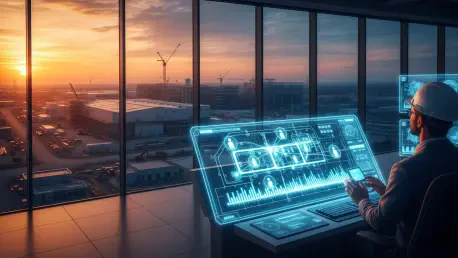
The integration of LTE-enabled Galaxy Watches with the SmartThings Pro infrastructure marks a massive leap from passive observation to active, high-stakes intervention. Instead of relying on a manager looking at a generic thermometer and shouting across a dusty field, the system feeds continuous heart rate and physical activity data directly into a centralized cloud-based dashboard. This allows a safety supervisor at a massive site, such as the semiconductor production line construction at the Pyeongtaek campus, to see exactly who is hitting a physical limit before the worker even feels the first signs of heat exhaustion. When the system detects a breach, managers do not just hope the employee notices the heat; they push tailored heat warnings and specific rest recommendations directly to the vibrating device on that individual’s wrist. It creates a closed-loop communication system where the environmental humidity and temperature are no longer just numbers on a screen but triggers for immediate, life-saving actions in the wild.
Could you explain the complexity behind moving from simple thermometer readings to an algorithm that estimates core body temperature for individual workers?
The real magic happens in the collaboration between Samsung and researchers at Incheon National University, where they developed an algorithm that treats every worker as a unique biological entity. Ambient heat is a poor predictor of danger on its own because a young, fit worker reacts differently to the heavy air than someone older or with a different body composition. By pulling data directly from the smartwatch and factoring in height, weight, age, and sex, the platform calculates a predictive core body temperature that is far more accurate than any external sensor could provide. It tracks the physical exertion levels alongside heart rate to determine if the body is effectively cooling itself or spiraling toward a dangerous threshold. This personalized approach ensures that safety warnings are not ignored as generic “false alarms” but are respected as precise medical insights tailored to that specific person’s physiology and current workload.
In terms of practical application at high-stakes sites, how is the system designed to differentiate between minor discomfort and a critical health emergency?
The system is built around three very specific, data-driven thresholds that align with rigorous government safety guidelines provided by South Korea’s Ministry of Employment and Labor. At 33 degrees Celsius, the platform triggers a heat advisory, which serves as an initial “heads up” to both the worker and the manager to prioritize hydration and monitor intensity. As the mercury climbs to 35 degrees, it escalates to a heat warning, and if the environment reaches the critical 38-degree mark, a serious warning is issued that demands immediate cessation of work. To ensure these numbers were not just theoretical, the Samsung Medical Center’s Data Science Research Institute stress-tested the predictive model against actual physical responses in controlled, high-heat conditions. This rigorous validation means that when a manager sees a “serious warning” on their dashboard, they know it is backed by medical-grade data and reflects a genuine threat to the worker’s life.
What is your forecast for the integration of biometric wearables in the industrial workplace?
I believe we are standing at the threshold of a new era where “personal protective equipment” will no longer be limited to hard hats and boots, but will always include a digital component like the Galaxy Watch. While basic measures like enforced hydration breaks remain the foundation of safety, the ability to harness continuous biometric data provides a personalized safety net that is simply too valuable for insurance providers and site owners to ignore. We are seeing the first instance of a mainstream tech giant moving into this niche, and it will likely trigger a wave of competitors to provide specialized patches and dashboards as standard issue. Within the next decade, I expect these B2B safety platforms to be mandatory for high-risk outdoor projects, as the data provides both a moral imperative and a financial incentive by drastically reducing workplace accidents and associated insurance liabilities.